In the realm of industrial automation, proximity sensors are indispensable components for non-contact detection of objects. A common and critical question from engineers and maintenance personnel is: "What is the normal power rating for a proximity sensor?" The answer is not a single figure but a range, typically between 1 to 3 Watts for standard DC models, with specific values dictated by sensor type, design, and application requirements. Understanding this power consumption is essential for proper system design, power supply sizing, and ensuring long-term reliability.
The power consumption of a proximity sensor, usually expressed in Watts (W) or Volt-Amperes (VA) for AC models, is fundamentally determined by its operating voltage and the current it draws. For instance, a common 24V DC inductive proximity sensor might have a maximum current draw of 200mA. Using the formula P = V x I, its maximum power consumption would be 24V 0.2A = 4.8W. However, the "normal" operating power is often lower, as the maximum current is typically only drawn under specific conditions, such as at the point of switch-on or under heavy load. The datasheet usually specifies a "typical" current consumption, which for a standard barrel-style inductive sensor often falls in the range of 5-15mA, translating to a normal power of 0.12W to 0.36W at 24V DC. The higher 1-3W range often accounts for sensors with integrated amplifiers, diagnostic LEDs, or short-circuit protection circuitry.
Several key factors influence where a sensor's power falls within the normal spectrum. First is the sensing technology. Inductive sensors (for detecting metals) and capacitive sensors (for detecting various materials) typically have similar low power demands. Photoelectric sensors, due to their need to power an emitter (LED or laser) and a receiver, generally consume slightly more power, especially long-range or high-speed models. Ultrasonic sensors also tend to have higher power requirements due to their transducer operation.
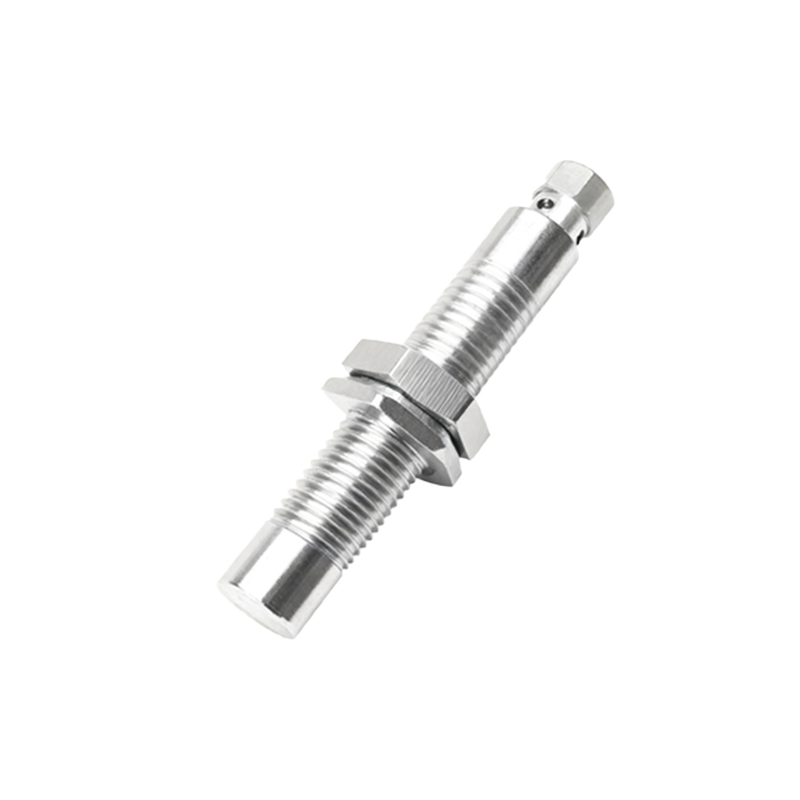
Second, the output configuration plays a significant role. Two-wire AC/DC sensors, which are wired in series with the load, have a residual voltage drop (leakage current) when "off," which constitutes a constant small power draw. Three-wire DC sensors (NPN or PNP) have separate power and load connections. Their power consumption is more stable and is primarily the quiescent current of the internal electronics. Sensors with analog outputs or IO-Link digital communication may have a slightly higher base power consumption due to more complex circuitry.
Third, the physical size and sensing distance matter. A miniature sensor with a 2mm sensing range will inherently consume less power than a large-factor sensor designed for a 40mm range, as the latter requires a larger coil or more powerful oscillator circuit to generate a sufficient electromagnetic or optical field.
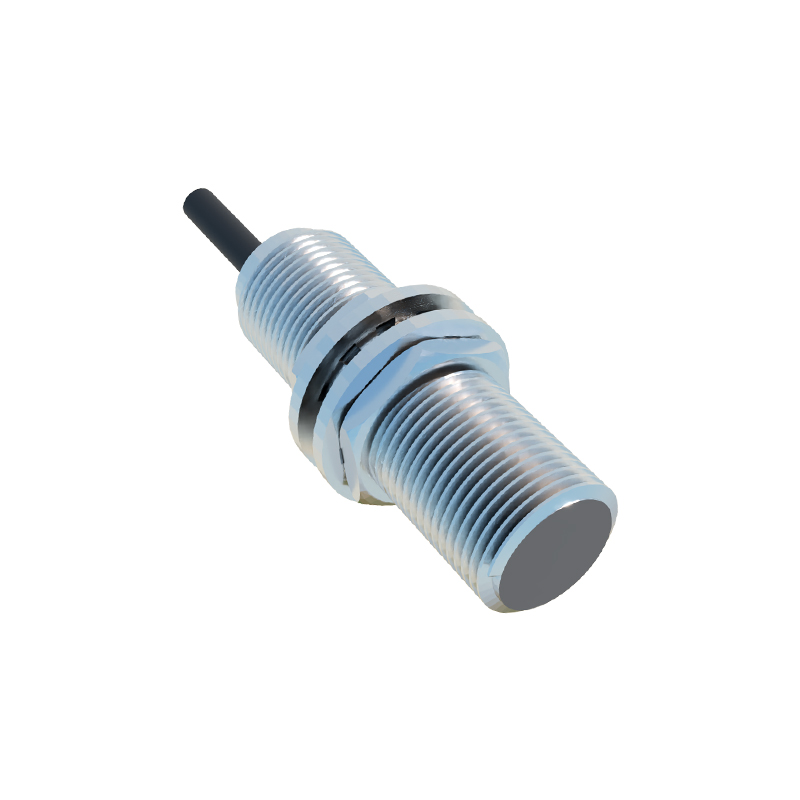
Why is understanding normal power crucial? From a design perspective, it ensures the power supply is not overloaded. While a single sensor's 0.5W draw seems negligible, a control panel with 200 sensors demands a 100W power budget just for sensing, excluding controllers and actuators. Oversized power supplies waste space and money; undersized ones cause voltage drops and sensor malfunction. Furthermore, in energy-conscious applications or battery-powered systems, low-power sensors (sometimes below 0.1W) are selected specifically to minimize total system consumption.
For AC-powered sensors, the concept of inrush current is vital. Upon energization, an AC sensor can momentarily draw a current 5-10 times its steady-state value to charge internal capacitors. This "power surge" is normal but must be considered when selecting circuit breakers or fuses to avoid nuisance tripping. The steady-state power for AC sensors is often listed in VA, reflecting both real and reactive power.
In practice, the definitive source for "normal" power is the manufacturer's datasheet. Look for parameters like "Current consumption" (typical or max), "Power loss," or "Power consumption." Reputable manufacturers provide clear graphs or tables. A normal operating condition is typically defined at 25°C ambient temperature with nominal voltage. Extreme temperatures can cause slight variations in power draw.
To conclude, there is a broad "normal" range for proximity sensor power, with 1-3W being a common benchmark for general-purpose industrial DC sensors under typical operating conditions. However, meticulous engineers will always calculate based on the specific sensor model's datasheet values, considering the actual number of devices and their duty cycle. This diligence prevents system instability and contributes to a robust, efficient, and reliable automation solution. Always prioritize the manufacturer's specifications over generic rules of thumb for critical designs.
SEO