Proximity magnetic sensors are integral components in industrial automation, robotics, and safety systems, leveraging magnetic fields to detect the presence or absence of ferromagnetic objects without physical contact. These sensors operate based on fundamental electromagnetic principles, primarily utilizing Hall effect or magnetoresistive technologies to convert magnetic flux variations into electrical signals.
The Hall effect sensor, discovered by Edwin Hall in 1879, functions by generating a voltage difference across a conductor when exposed to a perpendicular magnetic field. In proximity applications, a permanent magnet is often attached to the target object. As the object approaches, the magnetic field distorts, causing the Hall element to produce a proportional output voltage. This voltage is then processed by integrated circuitry to trigger switches or provide analog signals for distance measurement. Hall effect sensors excel in environments with dust, moisture, or vibrations due to their non-contact nature, offering high reliability and longevity.

Magnetoresistive sensors, including anisotropic (AMR) and giant magnetoresistance (GMR) types, rely on changes in electrical resistance under magnetic influence. AMR sensors use ferromagnetic materials whose resistance varies with the angle between magnetization and current flow, while GMR sensors exploit quantum mechanical effects in multilayer structures for greater sensitivity. These sensors detect subtle magnetic field shifts, making them suitable for precision positioning and speed sensing in machinery.
Key design considerations include sensing range, typically from a few millimeters to several centimeters, and immunity to electromagnetic interference (EMI). Shielding and differential signal processing are employed to minimize noise. Additionally, temperature compensation circuits ensure stable performance across industrial operating conditions from -40°C to 150°C.
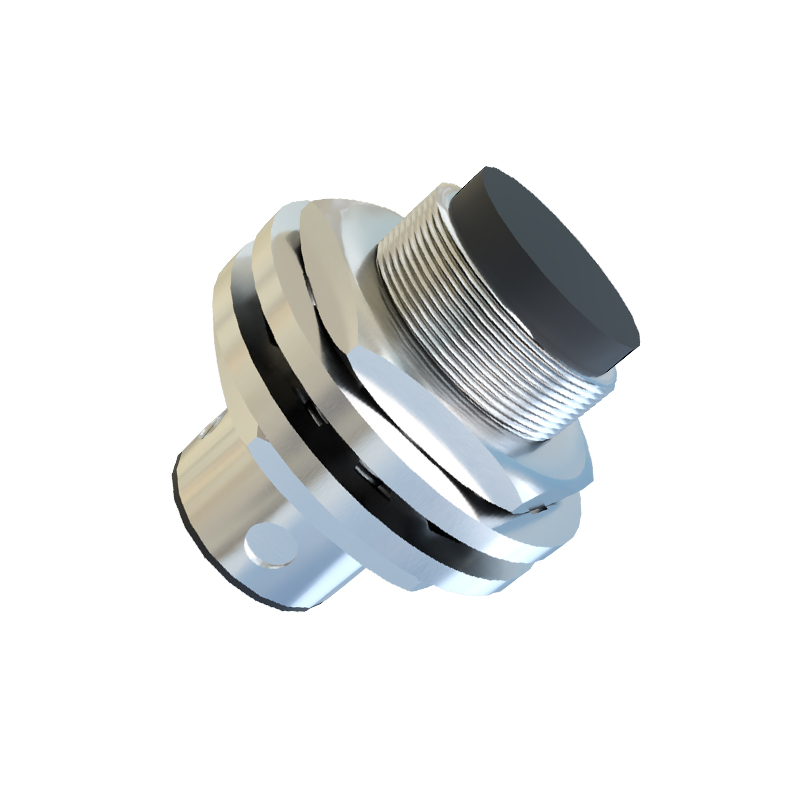
Applications span diverse sectors. In automotive systems, proximity magnetic sensors monitor wheel speed for anti-lock braking and detect gear positions. Manufacturing lines use them for part counting, conveyor belt control, and robotic arm alignment. Safety interlocks in machinery depend on these sensors to prevent accidental startups during maintenance.
Advancements in miniaturization and IoT integration have enabled smart sensors with digital outputs (e.g., IO-Link) for real-time diagnostics and predictive maintenance. Future trends focus on enhancing sensitivity for non-ferrous metal detection and reducing power consumption for battery-operated devices.
In summary, proximity magnetic sensors provide robust, contactless detection solutions by harnessing electromagnetic phenomena. Their adaptability to harsh conditions and evolving technological capabilities solidify their role in advancing industrial automation and smart systems.