Proximity sensors are indispensable components in modern industrial automation, robotics, and countless electronic systems. Their primary function is to detect the presence or absence of an object within a specified range without any physical contact. This non-contact detection offers significant advantages, including high reliability, long operational life, and the ability to function in harsh environments. For electrical engineers designing control systems, selecting the appropriate type of proximity sensor is critical for optimal performance. This guide provides a detailed overview of the main categories of proximity sensors, their operating principles, and typical applications.
The most fundamental classification of proximity sensors is based on their underlying detection technology. The four primary types are Inductive, Capacitive, Ultrasonic, and Photoelectric sensors. Each type interacts with targets in a distinct manner, making them suitable for specific materials and environmental conditions.
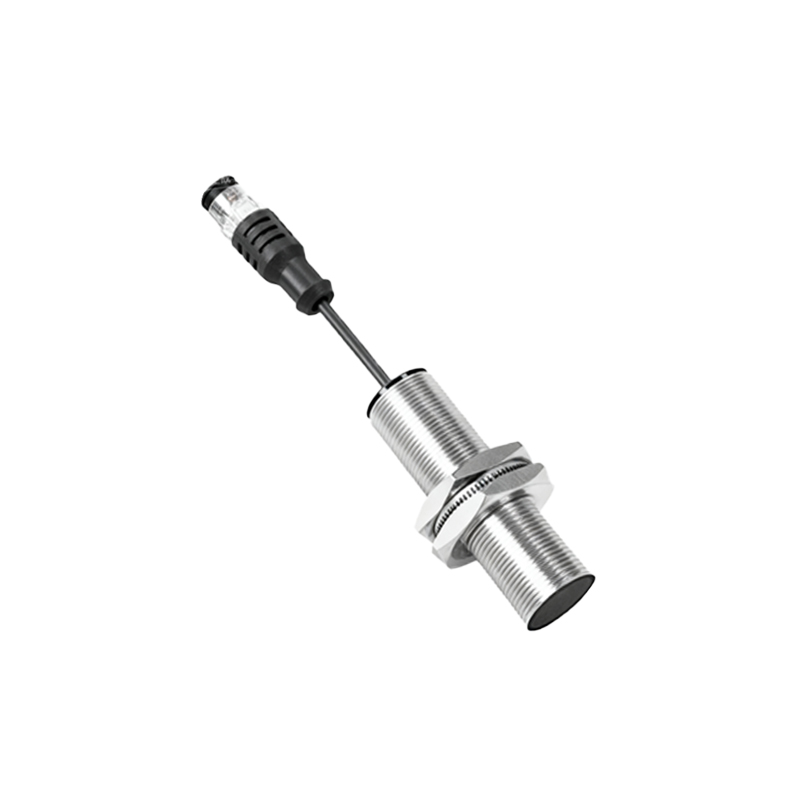
Inductive Proximity Sensors are the workhorses of metal detection in industrial settings. They operate on the principle of electromagnetic induction. The sensor generates an oscillating electromagnetic field from its active face. When a metallic object enters this field, eddy currents are induced within the target, causing a change in the oscillation amplitude. This change is detected by the sensor's internal circuitry, which triggers a switching output. Inductive sensors are highly reliable for detecting ferrous and non-ferrous metals, though their sensing range varies with the metal type. They are immune to dust, oil, and non-metallic contaminants, making them ideal for machine automation, position sensing in cylinders, and metal part counting on conveyor lines.
Capacitive Proximity Sensors, in contrast, can detect both metallic and non-metallic materials, including liquids, plastics, glass, and wood. They function by generating an electrostatic field. The sensor and the target act as two plates of a capacitor. As a target approaches, it alters the dielectric constant of the space between them, changing the capacitance of the oscillator circuit. Once this change reaches a threshold, the output state switches. These sensors are perfect for applications like liquid level detection in tanks, material presence sensing in packaging (e.g., detecting filled bottles), or monitoring granular materials. They can also sense through certain non-metallic walls, allowing for sealed container applications.
Ultrasonic Proximity Sensors utilize sound waves beyond the human hearing range. They emit high-frequency ultrasonic pulses and measure the time it takes for the echo to return from a target object. This time-of-flight principle allows them to precisely measure distance, not just detect presence. They are effective for detecting objects of virtually any material, shape, or color, as long as the surface is capable of reflecting sound waves. They perform well in environments with dust, smoke, or fog where photoelectric sensors might fail. Common uses include pallet detection in logistics, loop control in winding machines, and distance measurement in vehicle parking systems. However, they can be affected by temperature variations and air turbulence.
Photoelectric Proximity Sensors operate using a light emitter (usually LED or laser) and a receiver. They are categorized into three main modes: through-beam, retro-reflective, and diffuse (proximity) mode. The diffuse mode is the true "proximity" style, where the sensor houses both emitter and receiver. It detects an object when the emitted light is reflected back to the receiver. These sensors offer very long sensing ranges and fast response times. They can detect small objects and are excellent for sensing a wide variety of materials, though transparent objects or highly reflective surfaces can pose challenges. Applications are vast, including object counting on high-speed lines, break detection in web processes, and registration control in printing.
Beyond these four, other specialized types exist, such as Magnetic Proximity Sensors (reed switches or Hall-effect sensors) that detect permanent magnets, commonly used for detecting cylinder piston position.
When selecting a proximity sensor, an engineer must consider several key parameters: the nature of the target material, the required sensing distance, environmental factors (like temperature, moisture, or contaminants), response speed, output type (PNP/NPN, analog, IO-Link), and electrical requirements. Understanding the core differences between inductive, capacitive, ultrasonic, and photoelectric technologies is the first and most crucial step in specifying the right sensor for a robust and efficient electrical control system.