In industrial automation and control systems, proximity sensors are indispensable components for detecting the presence or absence of objects without physical contact. However, these sensors are often susceptible to electrical noise, mechanical vibrations, or environmental interference, leading to false triggering or signal bounce. This phenomenon, known as "contact bounce" in mechanical contexts or "signal chatter" in solid-state sensors, can compromise system reliability, cause erroneous counts, or trigger unintended machine actions. To mitigate these issues, hardware debouncing techniques are essential for ensuring clean, stable output signals from proximity sensors.
Debouncing refers to the process of eliminating transient fluctuations in a sensor's output to deliver a single, definitive state change. While software debouncing via microcontrollers is common, hardware-based methods offer distinct advantages in high-speed, real-time, or safety-critical applications where software latency or processing overhead is unacceptable. Hardware debouncing provides immediate signal conditioning at the source, enhancing robustness against electromagnetic interference (EMI) and voltage spikes.
One fundamental approach is the use of RC (resistor-capacitor) low-pass filters. By integrating an RC circuit at the sensor's output, rapid signal transitions are smoothed, as the capacitor charges and discharges through the resistor. The time constant (τ = R × C) determines the debounce period; selecting appropriate values filters out brief noise pulses while maintaining acceptable response times. For instance, in a capacitive proximity sensor detecting metallic objects, a 10kΩ resistor and 100nF capacitor can effectively suppress millisecond-level bounces without significantly delaying detection. This method is cost-effective and simple but may reduce edge sharpness in high-frequency applications.
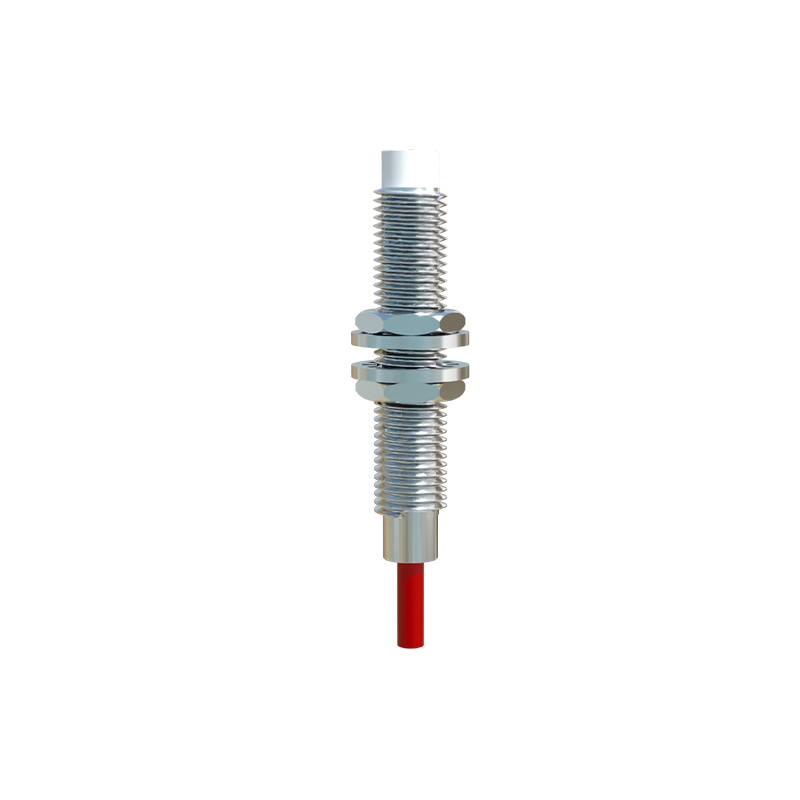
Another robust technique involves Schmitt trigger circuits, which incorporate hysteresis to eliminate ambiguity around threshold voltages. A Schmitt trigger, often implemented using dedicated ICs like the 74HC14 or operational amplifiers, converts a noisy input into a clean digital output. When the sensor signal crosses a rising threshold (V_T+), the output switches high; it only switches low after the signal falls below a lower threshold (V_T-). This hysteresis gap prevents multiple toggles caused by noise near a single threshold, making it ideal for inductive proximity sensors in electrically noisy environments like motor drives or welding equipment. Combining an RC filter with a Schmitt trigger further enhances noise immunity.
For applications demanding high precision, monostable multivibrators (one-shots) can be employed. Devices such as the 555 timer or dedicated monostable ICs generate a fixed-duration output pulse upon detecting a sensor edge, ignoring subsequent transitions during the pulse period. This ensures that each detection event produces a single, timed output, useful in counting or sequencing tasks. For example, in conveyor belt systems using photoelectric proximity sensors, a one-shot circuit can guarantee that each passing item is counted only once, despite potential vibration-induced bounces.
In addition to these circuits, proper sensor installation and shielding play a crucial role in minimizing bounce sources. Ensuring stable power supplies with decoupling capacitors, using twisted-pair cables to reduce EMI, and grounding sensor housings can prevent external noise from inducing signal chatter. For harsh industrial settings, opting for sensors with built-in debouncing features or high immunity ratings (e.g., IEC 60947-5-2 compliance) is advisable.
When designing a hardware debouncing solution, engineers must balance response speed, power consumption, and cost. RC filters suit low-speed applications with moderate noise, while Schmitt triggers excel in noisy digital systems. Monostable circuits are preferred for event-driven tasks requiring precise timing. Testing under real operating conditions—simulating vibrations, temperature swings, and electrical disturbances—is vital to validate debouncing performance.
Ultimately, effective hardware debouncing for proximity sensors enhances system durability and accuracy, reducing maintenance downtime and improving safety. By selecting and implementing appropriate techniques based on sensor type and environmental factors, engineers can ensure reliable operation in diverse industrial automation scenarios, from packaging machinery to robotic assembly lines.