In the realm of industrial automation and control, reliable non-contact sensing is paramount. Among the various technologies available, Hall Effect magnetic proximity switches stand out for their robustness, longevity, and versatility in detecting the presence or absence of ferromagnetic objects. Unlike inductive or capacitive sensors, these switches operate based on magnetic fields, making them uniquely suited for specific challenging environments.
The core principle of a Hall Effect sensor is the generation of a voltage difference—the Hall voltage—across an electrical conductor when a magnetic field is applied perpendicular to the current flow. In a magnetic proximity switch, this conductor is a thin semiconductor element. A permanent magnet is either integrated into the switch housing or is the target itself. When a ferromagnetic object (like a gear tooth, piston, or actuator flag) enters the sensing range, it disturbs or concentrates the magnetic field from the magnet. This change in field strength is detected by the Hall element, which triggers a solid-state electronic circuit to switch its output state (e.g., from OFF to ON). This solid-state design means there are no moving parts to wear out, leading to exceptionally high cycle life and reliability.
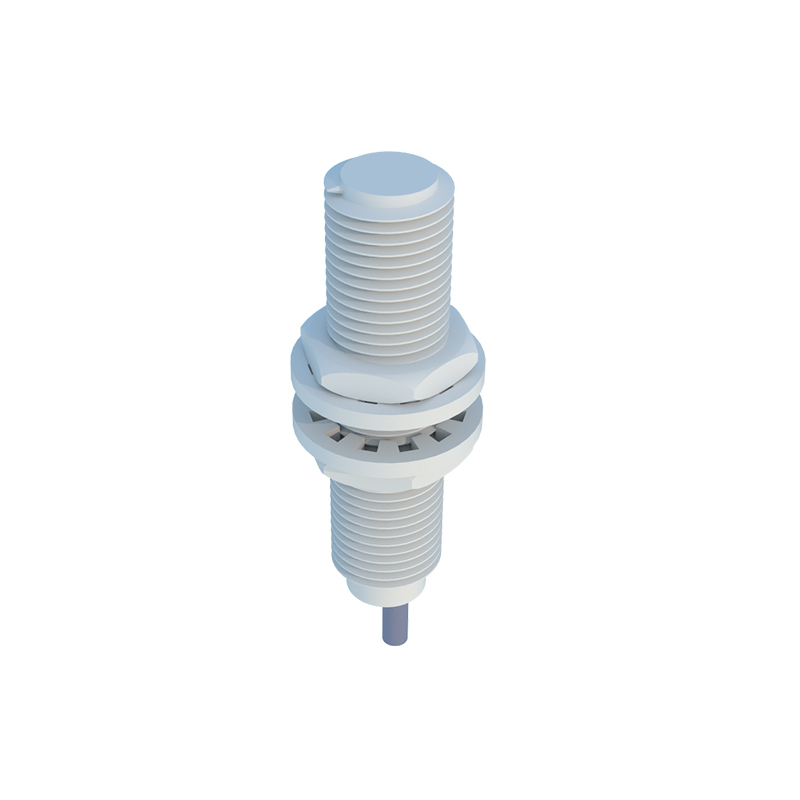
Key operational characteristics define their performance. The sensing distance, typically ranging from a few millimeters up to about 30 mm, is a critical specification. It is generally shorter than that of inductive sensors but is unaffected by non-metallic barriers like plastic, paint, or dirt. This allows for sealed, encapsulated designs that achieve high Ingress Protection (IP) ratings, such as IP67 or IP69K, making them ideal for washdown areas in food & beverage or harsh outdoor conditions. Their switching frequency can be very high, often in the kilohertz range, enabling precise detection of fast-moving targets like rotating gears or conveyor chain links. Furthermore, they are polarity-sensitive; some models detect only the south or north pole of a magnet, allowing for directional sensing.
The applications for Hall Effect magnetic proximity switches are extensive across industries. In automotive manufacturing, they are used for camshaft and crankshaft position sensing. In material handling, they detect the position of cylinders on pneumatic actuators or serve as limit switches on linear slides. A major advantage is their use in speed sensing: by mounting a ring magnet or a ferromagnetic gear near the sensor, each passing tooth triggers a pulse, allowing for accurate RPM measurement. They are also indispensable in safety systems, such as door position monitoring on machinery guards, where their non-contact nature and fail-safe designs are crucial.
When selecting a Hall Effect magnetic proximity switch for an application, engineers must consider several factors. First is the output type: PNP (sourcing) or NPN (sinking) transistor outputs are standard, with 2-wire, 3-wire, or even 4-wire (with dual independent outputs) configurations available. The output must be compatible with the PLC or controller input card. The housing material, often stainless steel (e.g., V4A/AISI 316) or nickel-plated brass, must withstand the chemical and physical environment. Electrical specifications like operating voltage (commonly 10-30V DC), current rating, and protection against short-circuit, reverse polarity, and surge are vital for system integrity. Finally, the form factor—barrel-style (M8, M12, M18, M30 threaded housings) or rectangular block—must fit the mechanical design.
In comparison to reed switches, which also use magnets, Hall Effect sensors offer superior shock/vibration resistance, faster switching speeds, and more consistent performance over time. Compared to inductive sensors, they are not triggered by all metals, only ferrous ones, and can work through non-metallic walls. Their main limitation is the requirement for a magnetic field, either from a separate magnet or a magnetized target, and a typically shorter sensing range.
For optimal installation, ensure the target approaches the sensor's sensing face correctly as per datasheet diagrams. Maintain the specified mounting distances from ferrous metal surfaces to avoid magnetic shielding or false triggers. Always adhere to the specified electrical connections and consider using shielded cables in electrically noisy environments to prevent signal interference.
In conclusion, Hall Effect magnetic proximity switches are a sophisticated, reliable solution for position, speed, and presence detection of ferromagnetic objects. Their solid-state construction, environmental resilience, and high-speed capability make them a cornerstone of modern industrial control systems. A thorough understanding of their operating principles and careful selection based on application parameters enable engineers to design more efficient, durable, and maintenance-friendly automation solutions.