The global market for proximity sensors, a cornerstone of industrial automation, has witnessed significant price fluctuations and structural shifts over the past decade. Understanding these price trends requires a multifaceted analysis that goes beyond simple supply and demand, delving into technological evolution, material costs, competitive landscapes, and macroeconomic factors.
Historically, the price trajectory for standard inductive and capacitive proximity sensors followed a predictable path of gradual decline. This was primarily driven by economies of scale in manufacturing, process optimization, and the maturation of core technologies. High-volume production, particularly in Asian manufacturing hubs, pushed unit costs down, making these sensors highly accessible for basic detection tasks in packaging, material handling, and assembly lines. For years, the market was characterized by a clear segmentation: low-cost, standard-performance sensors for bulk applications, and premium-priced variants offering extended sensing ranges, specialized housings (e.g., stainless steel for washdown environments), or analog outputs.
However, the last five to seven years have introduced new dynamics that have altered this traditional pricing model. The most profound influence has been the rapid integration of advanced functionalities. The line between a simple proximity sensor and a sophisticated IoT-enabled device has blurred. Sensors now increasingly incorporate IO-Link communication, diagnostic capabilities (like condition monitoring and predictive maintenance alerts), and enhanced environmental robustness (IP69K ratings). This "smart sensor" trend has created a bifurcation in the market. While the price for basic, non-networked sensors continues to be highly competitive and even stagnant, the price premium for intelligent, feature-rich sensors has remained substantial or even increased. The added value from reduced downtime and integrated data outweighs the higher initial cost for many end-users.
Material cost volatility is another critical driver. Proximity sensors rely on semiconductors, rare-earth elements for magnets, and various metals and plastics. Fluctuations in the prices of copper, nickel, and specific electronic components directly impact manufacturing costs. The global chip shortage that peaked in 2021-2022 is a prime example, causing lead times to stretch and prices for many electronic components, including sensors, to spike. While this pressure has partially eased, it highlighted the supply chain's fragility. Manufacturers are now factoring in supply chain resilience and nearshoring/reshoring considerations, which may exert upward pressure on prices compared to the pure offshoring model of the past.
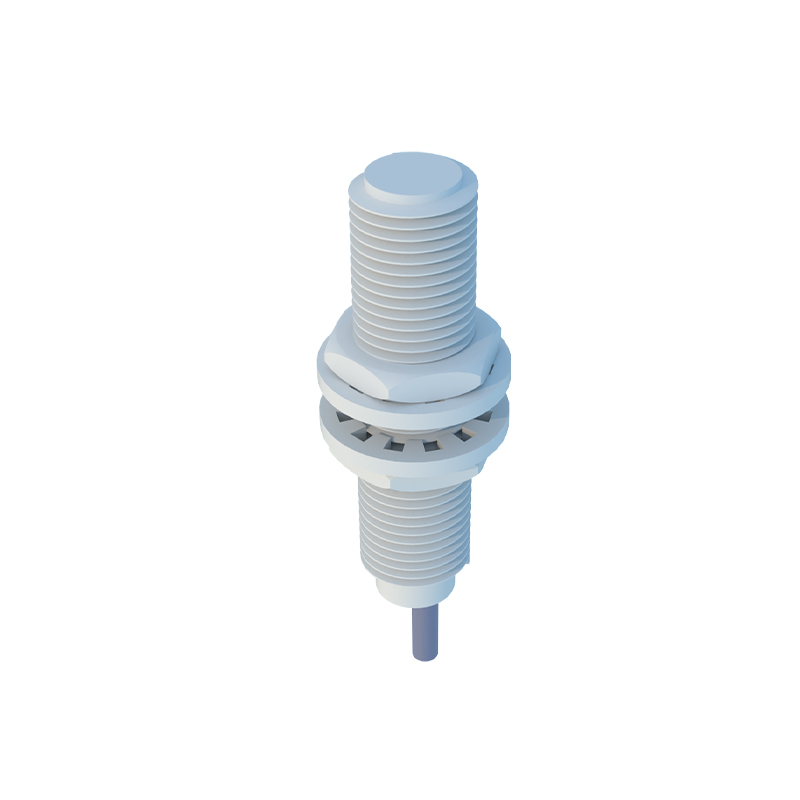
Competitive intensity remains fierce. The market is served by established giants like Siemens, Omron, Rockwell Automation, and Pepperl+Fuchs, alongside a multitude of strong regional players and low-cost manufacturers. This competition drives innovation and price pressure simultaneously. To differentiate, leading vendors compete on reliability, brand reputation, global service networks, and software ecosystems, allowing them to command higher prices. Conversely, generic or white-label sensors compete almost solely on price, creating a vast low-end market. The emergence of direct-to-consumer online industrial marketplaces has further increased price transparency and competition.
Looking forward, several trends will shape future price points. The adoption of new sensing technologies, such as miniaturized ultrasonic sensors or sensors with embedded AI for pattern recognition, will initially carry a premium. However, as these technologies standardize, their prices will follow the classic decline curve. Sustainability regulations and the push for energy-efficient designs may also influence material choices and costs. Furthermore, the demand from burgeoning sectors like electric vehicle manufacturing and renewable energy infrastructure provides a steady, high-value demand stream that supports market stability.
In conclusion, the price of a proximity sensor is no longer a simple function of its detection capability. It is a composite index reflecting its intelligence, connectivity, material composition, and the robustness of its supply chain. The overall market trend points towards a widening gap: aggressively low prices for standardized, disposable sensors versus stable or increasing value-based pricing for smart, connected, and durable sensors that contribute to overall equipment effectiveness (OEE). Procurement and engineering teams must therefore evaluate total cost of ownership, including integration, maintenance, and data utility, rather than focusing solely on the unit price tag.