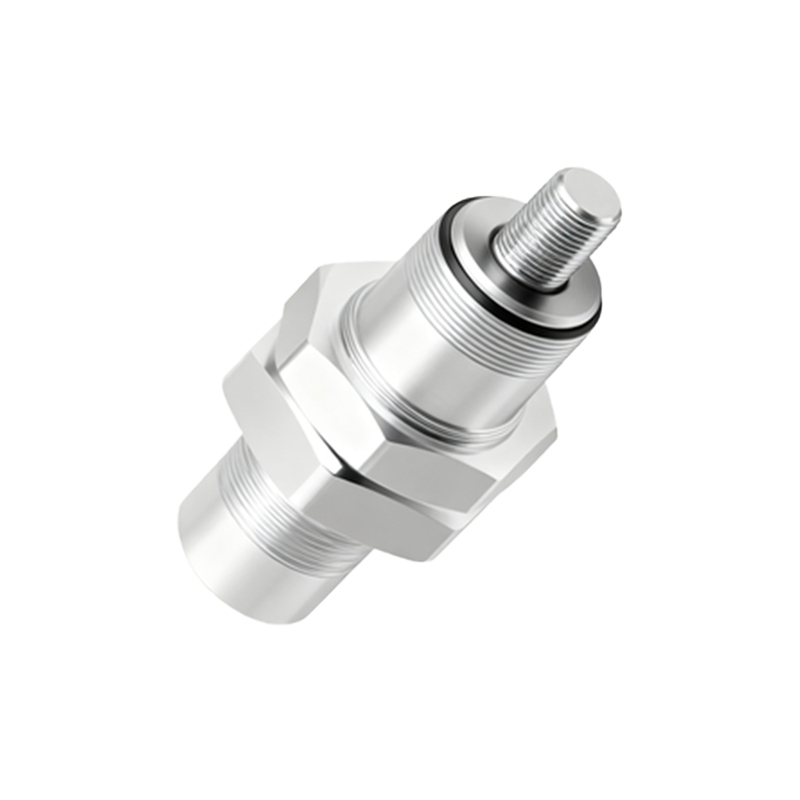
In the realm of industrial automation and process control, proximity sensors are indispensable components for non-contact detection of objects. Among various types, the hourglass proximity sensor, named for its distinctive dual-coil, tapered housing design, is prized for its precision and reliability in detecting metallic targets at specific distances. However, like all electromechanical devices, these sensors are susceptible to anomalies that can disrupt entire production lines. This article delves into the common causes, diagnostic procedures, and corrective actions for hourglass proximity sensor malfunctions, providing a comprehensive guide for maintenance engineers and technicians.
A primary symptom of an hourglass proximity sensor anomaly is intermittent or complete failure to detect a target within its specified sensing range. This may manifest as unexpected machine stoppages, false triggering, or failure to trigger at all. The root causes are often multifaceted, stemming from electrical, environmental, or mechanical factors.
Electrical issues are a frequent culprit. Voltage fluctuations outside the sensor's rated operating range (commonly 10-30V DC) can lead to erratic behavior. Excessive supply ripple or noise from nearby high-frequency devices like variable frequency drives (VFDs) or welding equipment can induce false signals. Internally, degradation of the oscillator circuit, which generates the electromagnetic field, or failure of the output switching transistor (in PNP or NPN configurations) can render the sensor inoperative. It is crucial to verify the power supply stability using a multimeter and an oscilloscope to check for noise. Ensuring proper grounding and the use of shielded cables, with the shield grounded at only one end, is a fundamental mitigation strategy against electromagnetic interference (EMI).
Environmental contaminants pose a significant threat. The narrow sensing face of the hourglass design can be particularly vulnerable to accumulation of metallic dust, chips, or conductive coolants. These substances can effectively "short" the sensing field, causing the sensor to latch on or behave unpredictably. Non-conductive buildup like oil, grease, or dirt, while not conductive, can physically displace the target, effectively increasing the sensing gap beyond the operational limit. Regular cleaning of the sensor face with appropriate, non-abrasive solvents is essential. In harsh environments, specifying sensors with higher Ingress Protection (IP) ratings, such as IP67 or IP69K, is advisable.
Mechanical misalignment is another common, yet often overlooked, cause. The sensing range of an inductive proximity sensor is highly dependent on the target material, size, and approach angle. If the target does not pass directly and squarely across the sensor's face, the effective sensing distance drops dramatically. Vibration can loosen mounting brackets, leading to gradual drift out of alignment. Engineers must periodically verify the mechanical alignment and mounting integrity. Furthermore, using a target made of the correct material (typically mild steel) and ensuring it meets the sensor's specified size (usually equal to or greater than the sensor face diameter) is critical for reliable operation.
Diagnosis should follow a systematic approach. Begin with a visual inspection for physical damage, contamination, and alignment. Next, use a reliable target to test the sensor's response at varying distances. A simple LED indicator on the sensor body can confirm output switching, but for a definitive diagnosis, monitor the output signal with a multimeter or a PLC input indicator. Swapping the suspect sensor with a known-good unit from a similar application is a highly effective isolation test, provided environmental and electrical conditions are consistent.
For persistent or complex issues, consulting the sensor's datasheet is paramount. Key parameters to review include the nominal sensing distance (Sn), the assured operational distance (typically 0.81 x Sn), temperature ratings, and short-circuit protection features. Some advanced diagnostic tools can analyze the sensor's oscillation amplitude, providing deeper insight into its health.
In conclusion, hourglass proximity sensor anomalies, while disruptive, are typically traceable to a finite set of causes. A disciplined troubleshooting regimen focusing on stable power, a clean operating environment, and precise mechanical installation will resolve the majority of failures. Proactive maintenance, including scheduled inspections and adherence to manufacturer specifications, remains the most cost-effective strategy for maximizing sensor lifespan and ensuring uninterrupted automation system performance. Understanding the underlying technology empowers engineers to not only fix problems but also to design more robust and fault-tolerant systems from the outset.