For musicians, hobbyists, and interactive installation artists, the laser harp stands as a captivating fusion of light and sound. Unlike a traditional harp, it creates ethereal music by interrupting beams of light, typically with one's hands. At the heart of this instrument's functionality lies a critical component: the sensor. Understanding the cost of laser harp sensors is essential for anyone looking to build or purchase one, as prices can vary dramatically based on type, quality, and complexity.
The primary role of the sensor in a laser harp is to detect when a laser beam is broken. This interruption is then converted into an electrical signal that triggers a specific musical note or sound. Therefore, the sensor's sensitivity, response time, and reliability directly impact the instrument's playability and performance. The cost spectrum for these sensors is broad, generally ranging from as little as $10 for a basic DIY setup to over $500 for high-end, professional-grade systems.
The most significant factor determining price is the sensor technology itself. Broadly, there are two main approaches: photoresistor-based systems and photodiode/phototransistor-based systems.
Photoresistor (LDR) Sensors: The Budget-Friendly Option

Photoresistors, or Light Dependent Resistors (LDRs), are the most affordable starting point. An LDR's resistance changes based on the amount of light hitting it. In a laser harp, when the beam is unbroken, the LDR's resistance is low. When your hand breaks the beam, resistance increases, signaling the microcontroller. A basic LDR can cost less than $1 per unit. A full set of 8-12 LDRs, plus necessary resistors and wiring, might keep the total sensor hardware cost under $15. However, this low price comes with trade-offs. LDRs are relatively slow to react and can be sensitive to ambient light changes, requiring careful calibration and often a darkened environment for consistent performance. They are ideal for simple hobbyist projects and learning the fundamentals.
Photodiode and Phototransistor Sensors: The Performance Standard
For more responsive and reliable laser harps, photodiodes or phototransistors are the preferred choice. These semiconductor devices react to light changes much faster than LDRs, enabling quicker note triggering and a more natural playing feel. A standard silicon photodiode might cost between $0.50 to $3 each. Phototransistors, which offer built-in amplification, are similarly priced. A set for a multi-beam harp using these components could range from $20 to $60 for the sensors alone. This setup requires more precise circuitry, often involving operational amplifiers (op-amps) to clean and strengthen the signal, which adds to the component cost and complexity but results in a far superior instrument.

Integrated Sensor Modules and Professional Systems
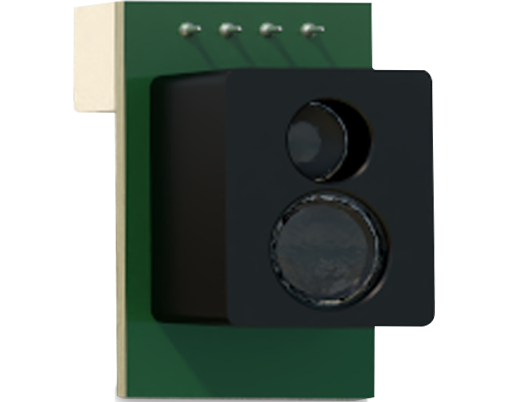
Moving up the price ladder, pre-built sensor modules simplify construction. These modules often pair a phototransistor with a comparator circuit on a small board, providing a clean digital "on/off" signal directly to a microcontroller. Prices for such modules range from $5 to $15 per beam. For a professional, stage-ready laser harp, manufacturers use highly tuned, proprietary sensor arrays. These systems are engineered for maximum immunity to stray light, extreme reliability, and lightning-fast response. In these commercial instruments, the sensor subsystem is part of a larger integrated package, and its individual cost is not separated. However, the price of the complete professional laser harp reflects this quality, often starting at $1,000 and reaching several thousand dollars.
Beyond the core sensor, several other cost factors must be considered. The choice of microcontroller (e.g., Arduino, Raspberry Pi Pico, or custom PCB) adds $5 to $50. The laser modules themselves are another major cost; safe, visible Class IIIA laser diodes suitable for harps cost roughly $5 to $20 each. The enclosure, wiring, audio interface, and software also contribute to the total budget.
For a DIY enthusiast, a fully functional, LDR-based laser harp can be built for $50 to $150 in total parts. A mid-range, photodiode-based harp with good performance might cost $150 to $400 to build. Purchasing a pre-built, consumer-grade laser harp from a niche manufacturer typically costs between $300 and $800. Professional performance models used by artists like Jean-Michel Jarre start well above $1,000.
In conclusion, there is no single price for a "laser harp sensor." The cost is a function of your goals. A hobbyist can experiment for under $20 in sensor components, while a performer invests in an integrated system where sensor excellence is a key part of a premium product. Your budget should align with the desired responsiveness, reliability, and finish, always prioritizing eye safety when working with lasers.