Proximity inductive ring sensors, often referred to as ring-type inductive proximity sensors, are specialized devices widely utilized in industrial automation for non-contact detection of metallic objects. These sensors operate on the principle of electromagnetic induction, generating an oscillating electromagnetic field within their annular sensing area. When a metallic target, such as a screw, nut, or washer, passes through the center of the ring, it disturbs this field. This disturbance causes a change in the oscillation amplitude or frequency, which is detected by the sensor's internal circuitry, subsequently triggering an output signal. This output is typically used to count objects, verify presence, or control sorting mechanisms on high-speed production lines.
A key advantage of ring sensors is their ability to detect small metallic items without physical contact, thereby eliminating mechanical wear and enabling reliable operation in harsh environments contaminated with oil, dust, or coolant. Common applications include monitoring fastener flow in assembly processes, inspecting components on conveyor belts, and ensuring proper feeding in packaging machinery. The through-hole design allows objects to pass directly through the sensor, making them ideal for in-line inspection where space is constrained.
Selecting the appropriate ring sensor involves careful consideration of several technical parameters. The inner diameter of the ring must be sufficiently larger than the target object to avoid false triggers, yet not so large as to compromise sensitivity. Sensing distance, typically a fraction of the ring's diameter, is critical for reliable detection. Factors such as target material (ferrous metals like iron and steel are more easily detected than non-ferrous metals like aluminum or copper), target size, and required switching frequency must be evaluated. Environmental conditions, including ambient temperature, potential exposure to chemicals, and electrical noise, also dictate the choice of sensor housing material (often PBT or stainless steel) and output type (PNP/NPN, NO/NC).
Installation and alignment are paramount for optimal performance. The sensor must be securely mounted to prevent vibration-induced errors, and the target's path should be centered through the ring's aperture. Misalignment can lead to inconsistent detection or reduced sensing range. Many modern ring sensors feature built-in diagnostics, such as LED indicators for output status and sensitivity adjustment potentiometers to fine-tune detection for specific targets, enhancing setup flexibility.
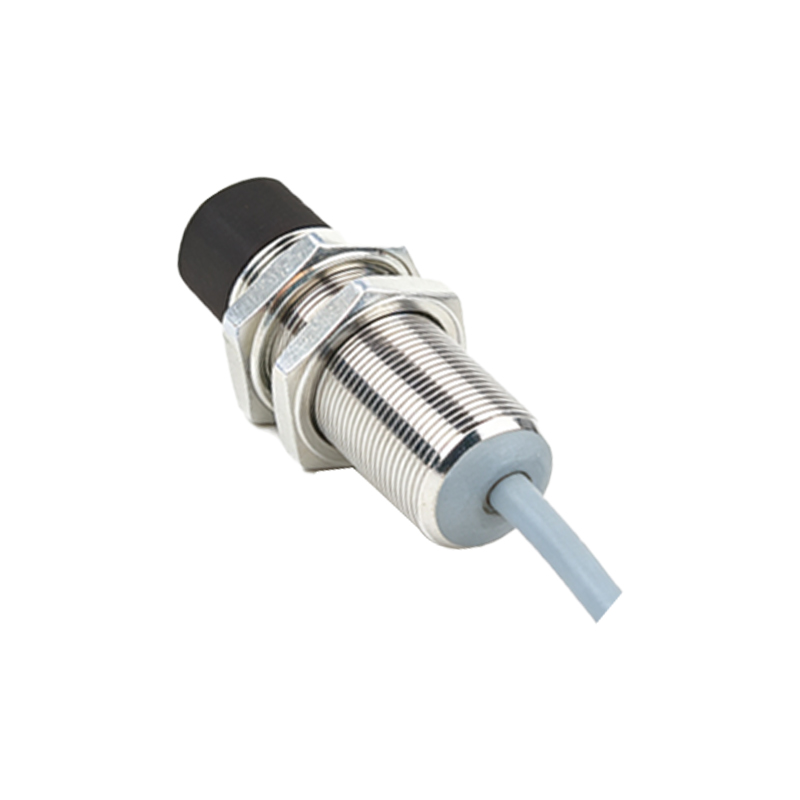
In comparison to other sensor types like photoelectric or capacitive sensors, inductive ring sensors offer distinct benefits for metallic object detection. They are immune to ambient light, transparent materials, and color variations that often challenge photoelectric systems. While capacitive sensors can detect non-metals, they are more susceptible to environmental humidity and material composition changes. Thus, for dedicated metal detection in industrial settings, inductive ring sensors provide a robust, cost-effective solution.
Maintenance is generally minimal, but periodic checks are recommended to ensure the sensing face remains free of metallic debris buildup, which could cause malfunction. With advancements in technology, contemporary models offer enhanced features like IO-Link communication for digital parameter setting and condition monitoring, facilitating integration into Industry 4.0 and smart factory frameworks.
In summary, proximity inductive ring sensors are indispensable components in modern manufacturing and automation. Their non-contact operation, durability, and precision in detecting metallic objects contribute significantly to improving production efficiency, quality control, and automated system reliability across diverse industries, from automotive to electronics manufacturing.