Proximity sensors are indispensable components in modern industrial automation, providing non-contact detection of objects within a specific range without physical touch. Their robust design and reliable operation make them suitable for harsh environments where mechanical switches would fail. This article delves into the structural composition and underlying working principles of the primary types of proximity sensors used in industry today.
Fundamentally, a proximity sensor consists of four core structural elements: the sensing element, oscillator circuit, signal converter, and output stage. The housing, typically made of metal (like brass or stainless steel) or high-grade plastic, encapsulates these components, offering protection against dust, moisture, and mechanical impact. The sensing face is the critical frontal area where the electromagnetic or electrostatic field is emitted and received.
The operational principle varies significantly based on the technology employed. The most common types are inductive, capacitive, and magnetic (Reed switch or Hall effect) sensors.
Inductive proximity sensors are used exclusively for detecting metallic objects. Their core structure includes a coil wound around a ferrite core, connected to an oscillator circuit. When powered, the oscillator generates a high-frequency alternating electromagnetic field at the sensing face. When a metallic target enters this field, eddy currents are induced on the target's surface. These eddy currents draw energy from the oscillator, causing a reduction in its oscillation amplitude. This amplitude change is detected by a threshold circuit (the signal converter), which then triggers a solid-state switch (the output stage) to change state, typically from open to closed. The sensing range depends on the coil size, oscillator frequency, and the target's material and size.
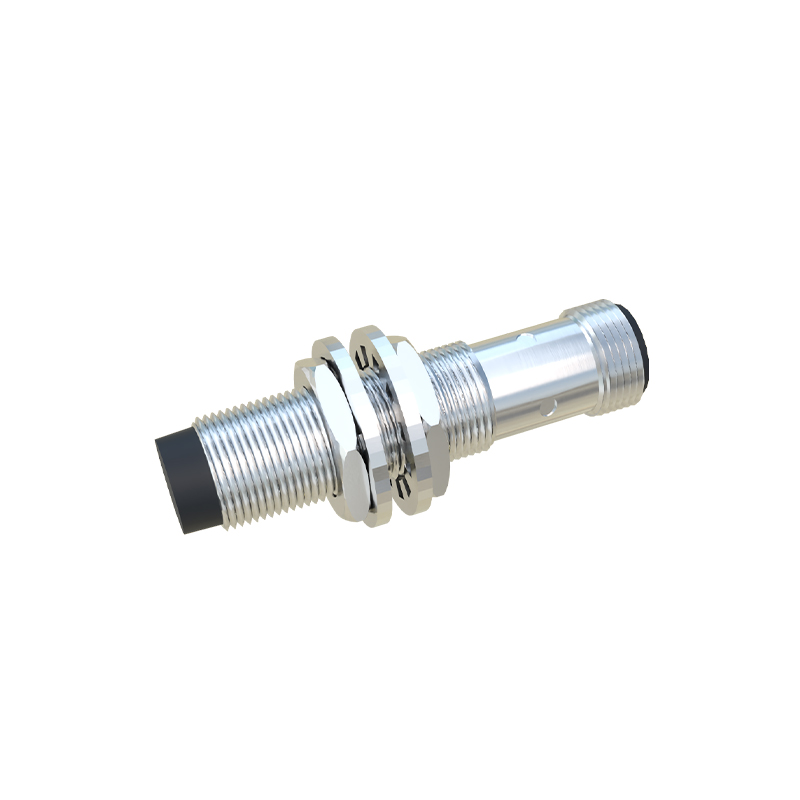
Capacitive proximity sensors can detect both metallic and non-metallic materials (plastics, wood, liquids, granules). Structurally, they resemble inductive sensors but have a different sensing electrode configuration. They form one plate of a capacitor, with the target object acting as the other plate. The internal oscillator circuit is tuned to a specific capacitance level. As a target approaches the sensing face, the capacitance between the electrode and the target increases. When this capacitance reaches a preset threshold, it alters the oscillator's condition. This change is processed, leading to an output signal change. Some models feature a sensitivity adjustment potentiometer to compensate for different material dielectric constants.
Magnetic proximity sensors, often called reed switches or Hall effect sensors, detect permanent magnets. A reed switch structure comprises two ferromagnetic, flexible metal reeds sealed within a glass tube filled with inert gas. When a magnetic field of sufficient strength is present, the reeds magnetize and attract each other, making contact to close a circuit. Hall effect sensors are solid-state devices. Their structure includes a semiconductor chip (Hall element), a voltage regulator, and an amplifier. When exposed to a magnetic field, the Hall element generates a minute voltage (Hall voltage) proportional to the field strength. This voltage is amplified and processed to produce a clean digital output signal. Hall effect sensors offer faster switching and virtually unlimited operational life compared to reed switches.
The output stage is a crucial structural block. Common output types include NPN/PNP transistors (sourcing or sinking DC), analog current (4-20 mA), or voltage (0-10 V) outputs, and even IO-Link digital communication interfaces for advanced diagnostics and parameterization. The choice depends on the PLC or controller input requirements.
In summary, the structure of a proximity sensor is meticulously engineered to translate a physical phenomenon—the presence of an object—into a precise electrical signal. Understanding the interplay between its internal components—the oscillator's field generation, the sensing element's interaction with the target, and the signal conditioning electronics—is key to selecting and applying the right sensor for demanding automation tasks, ensuring reliability, longevity, and precision in countless applications from packaging machinery to robotic assembly lines.