In the realm of industrial automation and precision electronics, miniature proximity sensors stand as critical components for non-contact detection. Their performance, reliability, and application suitability are fundamentally dictated by the raw materials employed in their construction. This article provides a detailed technical examination of these essential materials, focusing on their properties, selection criteria, and impact on sensor functionality.
The core sensing element of inductive proximity sensors is typically a coil wound from high-purity copper or silver-plated copper wire. Copper is favored for its excellent electrical conductivity, which ensures high quality factor (Q-factor) and sensitivity. The coil is often potted within a ferrite core. Ferrite, a ceramic compound consisting of iron oxide blended with nickel, zinc, or manganese oxides, serves to concentrate and direct the electromagnetic field. The specific composition of the ferrite—whether soft manganese-zinc for high permeability at lower frequencies or nickel-zinc for stability at higher frequencies—directly influences the sensor's switching frequency and sensing range.
For capacitive sensors, the critical material is the electrode plate. This is commonly fabricated from corrosion-resistant metals such as gold-plated nickel or stainless steel. The dielectric properties of the sensor face, or the material separating the electrode from the target, are equally vital. Engineering plastics like PBT (Polybutylene Terephthalate) or PPS (Polyphenylene Sulfide) are predominant choices. These thermoplastics offer superb dimensional stability, high dielectric strength, and resistance to a wide range of chemicals, ensuring consistent capacitance and reliable operation in harsh environments.
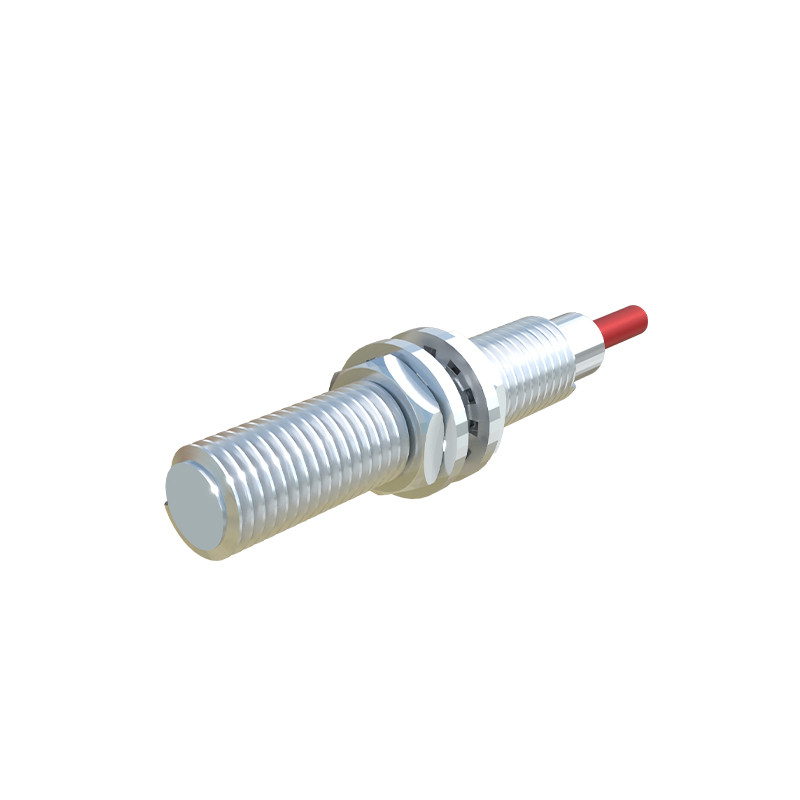
The housing or body of a miniature proximity sensor must provide robust protection against mechanical stress, fluids, and chemical exposure. Here, material science plays a pivotal role. Stainless steel, particularly grades 303 or 316L, is extensively used for metallic housings in demanding applications due to its superior strength and corrosion resistance. For non-metallic housings, advanced engineering polymers are the standard. PA (Polyamide or Nylon), especially glass-fiber reinforced variants, offers an outstanding balance of toughness, wear resistance, and moderate chemical resistance. For more aggressive chemical environments, PVDF (Polyvinylidene Fluoride) or PEEK (Polyether Ether Ketone) may be specified, despite higher cost, due to their exceptional inertness and thermal stability.
The front sensing face is a point of direct environmental interaction. For inductive sensors, this is often the ferrite core itself, sometimes coated with a thin, abrasion-resistant layer. For capacitive and some inductive sensors, a front cap made of specialized plastics is used. Materials like PTFE (Polytetrafluoroethylene) or specific PBT blends are selected for their non-stick properties, low moisture absorption, and ability to prevent material buildup, which is crucial in food processing or packaging industries.
Internal electronics are protected by potting compounds. These are typically epoxy or silicone-based resins. Epoxy resins provide a rigid, high-strength seal with excellent moisture and chemical barrier properties. Silicone gels, on the other hand, offer a softer, flexible encapsulation that can absorb thermal and mechanical stress, protecting sensitive ASICs (Application-Specific Integrated Circuits) and other components from vibration and thermal cycling.
Finally, the electrical connections rely on high-quality conductor materials. The internal wiring uses fine-stranded, tin-plated copper for flexibility and solderability. The connector bodies are molded from high-temperature plastics like PBT or LCP (Liquid Crystal Polymer) to withstand reflow soldering processes. The pins are commonly brass or phosphor bronze, plated with gold over nickel for optimal conductivity, corrosion resistance, and durable mating cycles.
In conclusion, the evolution of miniature proximity sensors is inextricably linked to advancements in material technology. The careful selection and combination of metals, ferrites, engineering plastics, and potting compounds enable these devices to achieve remarkable levels of miniaturization, precision, and durability. Understanding the role of each raw material is essential for engineers to select the optimal sensor for a given application, balancing performance requirements with environmental challenges and cost constraints. Future trends point toward the adoption of novel composite materials and nano-coatings to push the boundaries of sensitivity, size reduction, and operational lifespan even further.