In the intricate world of industrial automation, where precision and reliability are non-negotiable, proximity switch sensors operate as the fundamental, yet often overlooked, sensory organs. These devices, devoid of any physical contact, detect the presence or absence of an object, triggering a crucial action within a control system. Their silent, steadfast operation forms the backbone of countless processes, from assembly lines and robotic arms to safety interlocks and material handling systems.
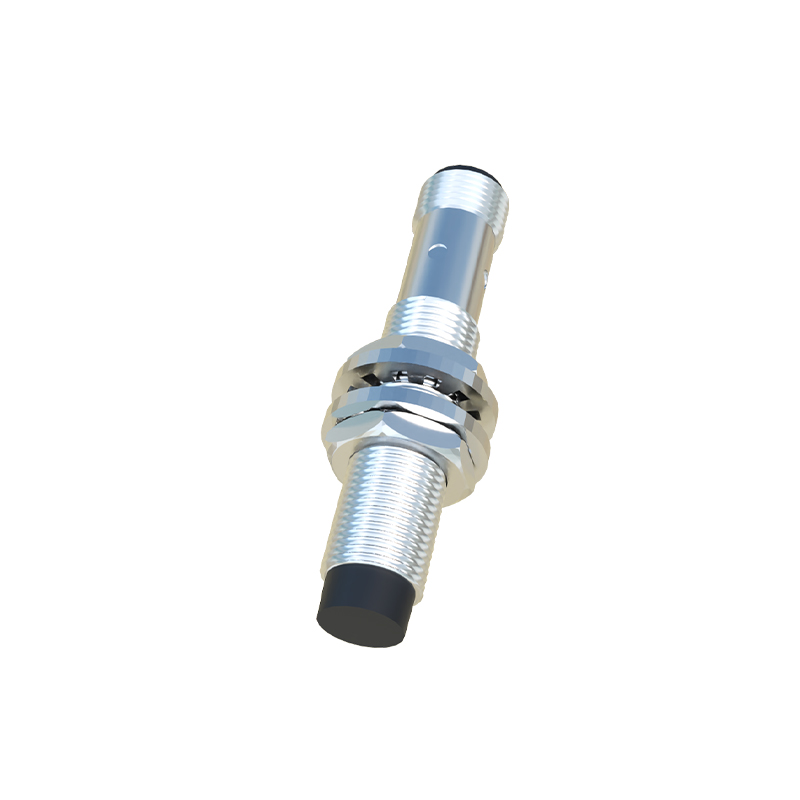
Unlike mechanical limit switches that require physical touch, proximity sensors work on various principles, primarily inductive, capacitive, and magnetic. Inductive proximity sensors are the workhorses in metal-dominated environments. They generate an electromagnetic field. When a metallic target enters this field, it induces eddy currents within the target, causing a change in the sensor's oscillation amplitude. This change is detected by the internal circuitry, which then switches the output state. Renowned for their robustness, they are immune to dust, oil, and non-metallic contaminants, making them ideal for harsh manufacturing settings involving machinery, motors, and metal parts.
For non-metallic materials such as wood, plastic, glass, or liquids, capacitive proximity sensors take the stage. They function by generating an electrostatic field. Any object with a dielectric constant different from air (which is virtually all materials) will alter the capacitance of the sensing field as it approaches. This alteration is measured, leading to an output switch. This capability makes them perfect for level detection in tanks, monitoring presence of packaging materials, or detecting filled bottles on a conveyor, regardless of their composition.
Magnetic proximity sensors, or reed switches, are activated by the presence of a permanent magnet. They are simple, cost-effective, and commonly used for position detection, such as in cylinder piston rods or door/window security systems. Their operation is binary and highly reliable in clean environments.
The selection of a proximity sensor is a critical engineering decision, hinging on several factors beyond just the target material. Sensing distance, or the nominal range at which the sensor can reliably detect a standard target, is paramount. Environmental conditions are equally crucial; sensors are rated with Ingress Protection (IP) codes to define their resistance to solids and liquids. Temperature ranges, electrical noise immunity, and the required output type (e.g., NPN sinking, PNP sourcing, or analog) must all align with the application's demands. Furthermore, housing material—typically nickel-plated brass, stainless steel, or PBT plastic—is chosen based on chemical exposure and physical stress.
The output circuitry is another vital consideration. Two-wire sensors are simple to wire but may have a residual leakage current. Three-wire DC sensors (NPN or PNP) are the most common, offering clear switching characteristics. Four-wire versions often provide both a Normally Open (NO) and a Normally Closed (NC) output from the same device. For analog sensors, the output is a continuous current or voltage signal proportional to the distance to the target, enabling precise positioning tasks.
Installation and configuration, though seemingly straightforward, demand attention. Maintaining the correct mounting distance and ensuring the target approaches the sensor head correctly is essential to avoid false triggers or reduced sensing ranges. Factors like flank mounting, embeddable versus non-embeddable designs, and shielding (which provides a more focused sensing field) must be considered to prevent interference from surrounding metal.
Looking ahead, the evolution of proximity sensors continues. Modern variants integrate advanced diagnostics via IO-Link communication, providing real-time data on operational status, temperature, and even signal strength. This facilitates predictive maintenance, reducing unplanned downtime. Miniaturization is also a persistent trend, allowing sensors to fit into increasingly compact machinery and devices.
In conclusion, proximity switch sensors are far more than simple on/off devices. They are sophisticated, application-specific components whose correct selection and implementation are critical to system efficiency, safety, and uptime. By understanding their operating principles, key specifications, and application nuances, engineers and technicians can harness their full potential, ensuring these unsung heroes continue to drive the seamless, automated operations that define modern industry. Their silent vigilance is, indeed, the pulse of automation.