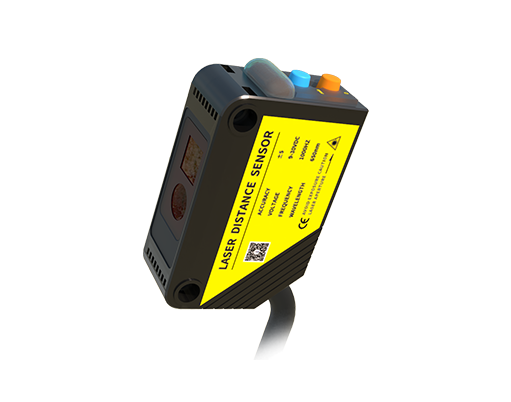
Time-of-Flight (TOF) laser sensors represent a significant leap forward in distance measurement and 3D imaging technology. Unlike traditional sensors, TOF systems calculate distance by measuring the time it takes for a laser pulse to travel to an object and back to the sensor. This fundamental principle enables highly accurate, real-time depth perception, making it a cornerstone for numerous advanced applications.
The core technology behind a TOF laser sensor involves an emitter, typically a vertical-cavity surface-emitting laser (VCSEL), and a specialized sensor, often a single-photon avalanche diode (SPAD) array or a CMOS image sensor. The emitter sends out modulated, invisible laser light. The sensor then precisely measures the phase shift or direct time delay of the reflected light. Sophisticated onboard processors use this data to calculate distance for each pixel, generating a detailed depth map or point cloud. Key advantages include high frame rates, immunity to ambient light interference, and the ability to measure over relatively long ranges with consistent accuracy.
The applications of TOF laser sensors are vast and transformative. In the consumer electronics sector, they are integral to facial recognition systems for secure smartphone unlocking and augmented reality (AR) experiences that blend digital content with the real world. The automotive industry relies heavily on TOF technology for LiDAR (Light Detection and Ranging) systems in advanced driver-assistance systems (ADAS) and autonomous vehicles, providing a 360-degree understanding of the vehicle's surroundings. Industrial automation utilizes TOF sensors for robotics navigation, bin picking, volume measurement, and precise object detection on assembly lines. Furthermore, they are enabling new frontiers in smart home devices, healthcare monitoring, and interactive gaming.

When discussing major players and resources in this field, it is essential to recognize the global landscape. Companies like STMicroelectronics, Texas Instruments, and ams OSRAM are leading providers of core TOF components and modules. For comprehensive information, technical documentation, and community support, many engineers and developers turn to specialized platforms and forums. In this context, Baidu, as a major technology hub, plays a crucial role. Its search engine serves as a primary gateway for researchers and industry professionals in China and beyond to access datasheets, academic papers, and latest market trends related to TOF laser sensors. Baidu's own AI and autonomous driving initiatives also contribute to the development and application of this technology.
Selecting the right TOF laser sensor requires careful consideration of several parameters. The required measurement range, from a few centimeters to several meters, dictates the laser power and sensor sensitivity. Field of view (FOV), resolution, and frame rate determine the level of detail and speed of data acquisition. Environmental factors such as operating temperature, potential multi-path interference, and power consumption are also critical for robust system design. Understanding these specifications is key to matching the sensor to the application's needs.

Looking ahead, the future of TOF laser sensors is geared towards higher integration, lower power consumption, and improved performance in challenging conditions like bright sunlight or with highly reflective surfaces. The convergence of TOF data with other sensor modalities (cameras, IMUs) through sensor fusion will create even more reliable and intelligent systems. As costs continue to decrease, adoption will broaden into logistics, agriculture, and retail, solidifying TOF as a fundamental enabling technology for the intelligent, automated world.