In industrial automation and control systems, proximity sensors are ubiquitous components, prized for their non-contact detection capabilities. Among the various types, inductive proximity sensors hold a dominant position for metal detection. A fundamental and often misunderstood characteristic of these sensors is their specific sensitivity to ferrous metals, such as iron and steel, while exhibiting weak or no response to non-ferrous metals like aluminum, copper, or brass under standard conditions. This article delves into the underlying electromagnetic principles, sensor design, and practical implications of this selective detection.
The core operating principle of an inductive proximity sensor is electromagnetic induction. The sensor's active face contains a coil that is part of an oscillator circuit, generating a high-frequency alternating electromagnetic field. When a conductive object enters this field, eddy currents are induced on the object's surface. These eddy currents create their own opposing magnetic field, which interacts with the sensor's original field. This interaction causes a change in the oscillator's amplitude or frequency. The sensor's internal circuitry detects this change and triggers a switching output.
The key to understanding ferrous metal specificity lies in two distinct physical phenomena: eddy current generation and magnetic permeability. All conductive metals, including aluminum and copper, will generate eddy currents. However, ferrous metals possess an additional property: high magnetic permeability. Magnetic permeability (μ) is a measure of a material's ability to support the formation of a magnetic field within itself. It indicates how easily a material can be magnetized.
When a ferrous metal object enters the sensing field, two effects occur simultaneously:
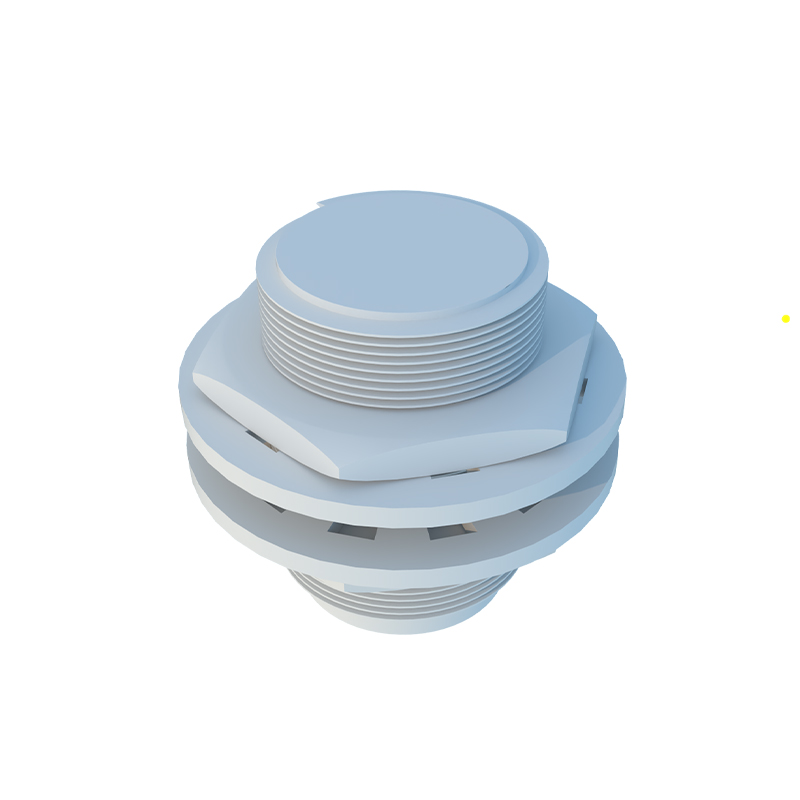
1. Eddy Current Effect: As with any conductor, eddy currents are generated, absorbing energy from the oscillator.
2. Permeability Effect: The high μ of the ferrous material causes a significant concentration and distortion of the sensor's magnetic field lines. This effectively changes the inductance of the coil itself, providing a much stronger and more detectable signal to the oscillator circuit.
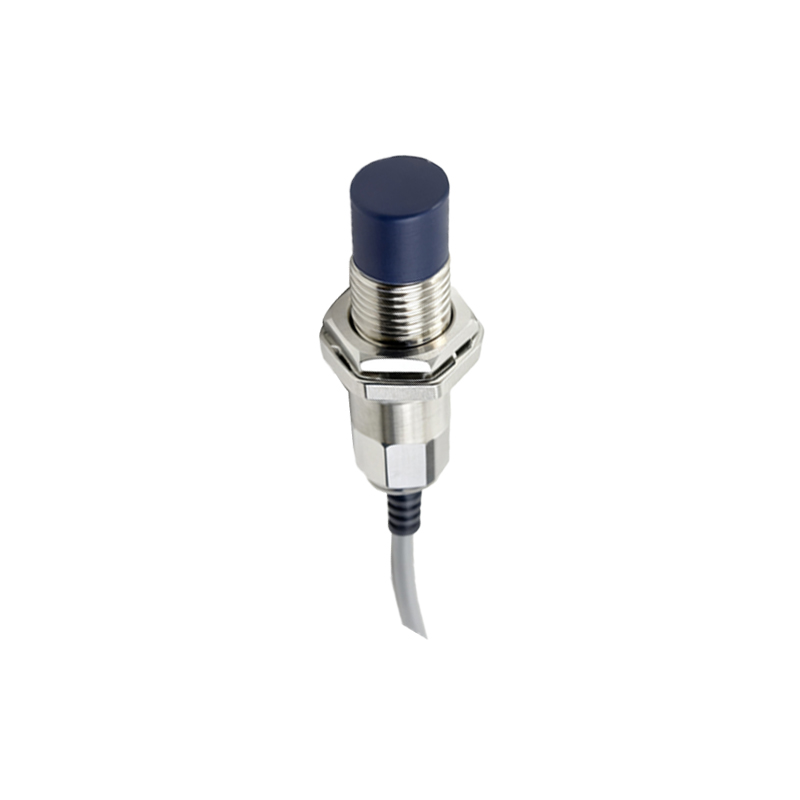
For non-ferrous metals with low permeability (μ ≈ 1, similar to air), only the eddy current effect is present. While this does cause a detectable change, the effect is markedly weaker. For instance, the sensing distance for aluminum is typically only 30% to 50% of the rated sensing distance for mild steel. For copper and brass, it can be as low as 20-30%. Materials like stainless steel (particularly austenitic grades like 304) present a special case; they are ferrous but often have low permeability, leading to reduced sensing ranges.
Sensor manufacturers calibrate and specify their standard inductive sensors based on a reference target, universally defined as a square of mild steel (Fe 360) with a thickness of 1mm and side length equal to the sensor's diameter or the rated sensing distance (whichever is greater). This standardization ensures consistency but inherently biases the sensor's sensitivity profile towards the combined eddy current and high-permeability response of mild steel.
This design focus has critical practical advantages. In industrial environments, machine frames, actuators, gears, and structural components are predominantly made from ferrous alloys. The sensor's inherent filtering of non-ferrous objects increases reliability by reducing false triggers from aluminum chips, brass fittings, or human presence. It allows for precise detection of critical ferrous components like piston positions, gear teeth, or metal pallets amidst other conductive clutter.
For applications requiring detection of non-ferrous metals, specialized sensors are available. Factor-1 Sensors are standard inductive sensors whose sensing distance is reduced. All-Metal Sensors (sometimes called "non-ferrous" sensors) are optimized for a stronger eddy current response. They often use a higher operating frequency to maximize eddy current generation in materials like aluminum and copper, effectively making them more sensitive to these metals while still detecting steel. Ferrous-Only Sensors incorporate a permanent magnet and a magneto-sensitive element (like a Reed switch or Hall-effect sensor). They detect only the disturbance in the permanent magnet's field caused by a ferrous object, completely ignoring all non-ferrous conductors and non-conductive materials.
In conclusion, the fact that standard inductive proximity sensors primarily sense ferrous metals is not a limitation but a deliberate design outcome rooted in electromagnetic physics. It leverages the dual effects of conductivity and high magnetic permeability to provide robust, reliable detection in typical industrial settings dominated by iron and steel. Understanding this principle is essential for engineers to select the correct sensor type—standard inductive, all-metal, or ferrous-only—for any given application, ensuring system reliability and optimizing performance.