In the realm of industrial automation and precision measurement, transit time laser sensors have emerged as a cornerstone technology for non-contact distance and level measurement. Unlike triangulation-based laser sensors, which rely on the angle of a reflected beam, transit time sensors, also known as time-of-flight (ToF) sensors, measure distance by calculating the time it takes for a laser pulse to travel to a target and back. This fundamental principle offers distinct advantages in terms of range, environmental robustness, and application flexibility.
The core operating principle is elegantly simple yet relies on sophisticated electronics. The sensor emits a short, intense pulse of laser light, typically from a laser diode. This pulse travels through the air at the constant speed of light (approximately 3x10^8 m/s). Upon striking the target object, a portion of the light is reflected back towards the sensor, where a highly sensitive photodetector, such as an avalanche photodiode (APD), captures it. An integrated high-speed timing circuit, often with picosecond resolution, precisely measures the elapsed time between the emission and the reception of the pulse. The distance (d) to the target is then calculated using the formula: d = (c * t) / 2, where 'c' is the speed of light and 't' is the measured transit time. The division by two accounts for the round-trip journey of the light pulse.
This methodology grants transit time laser sensors several critical benefits. First and foremost is their exceptional measuring range. They are capable of accurately measuring distances from a few meters up to several hundred meters, and in some specialized configurations, even kilometers, without a significant degradation in performance. This makes them ideal for large-scale applications. Secondly, they are largely unaffected by the color, texture, or reflectivity of the target surface. While extremely low-reflectivity surfaces (like black velvet) can pose challenges, modern sensors with high-power lasers and sensitive receivers can handle a vast majority of industrial materials, from bright metals to dark plastics. Thirdly, the laser spot size remains relatively constant over the entire measuring range. Unlike triangulation sensors where the spot size changes with distance, the ToF sensor's spot is small and consistent, allowing for precise measurement of small objects or edges.
The applications for transit time laser sensors are vast and span numerous industries. In logistics and warehousing, they are deployed for pallet profiling, container level measurement, and automated guided vehicle (AGV) navigation, ensuring efficient use of space and collision avoidance. In the construction and mining sectors, they monitor stockpile volumes of bulk materials like coal, gravel, or ore, providing critical data for inventory management. Within manufacturing, they control crane positioning, measure large parts or rolls, and assist in robotic bin picking where the robot needs to know the distance to an object in a bin. Furthermore, they are increasingly used in agricultural automation for monitoring silo levels and in traffic management systems for vehicle detection and classification.

Recent technological advancements continue to push the boundaries of this technology. The development of more powerful and eye-safe laser classes (e.g., Class 1) enhances operational safety. Improvements in timing circuitry, often using advanced time-to-digital converters (TDCs), have drastically improved resolution, allowing for sub-millimeter accuracy even at long ranges. The integration of sophisticated digital signal processing (DSP) algorithms helps filter out ambient light noise and compensate for varying environmental conditions. The advent of multi-echo processing is particularly noteworthy; this feature allows the sensor to detect and evaluate multiple return pulses from a single emission. This enables it to "see through" disturbances like dust, steam, or wire mesh fences, measuring the true target behind the obstruction—a capability invaluable in harsh industrial environments.
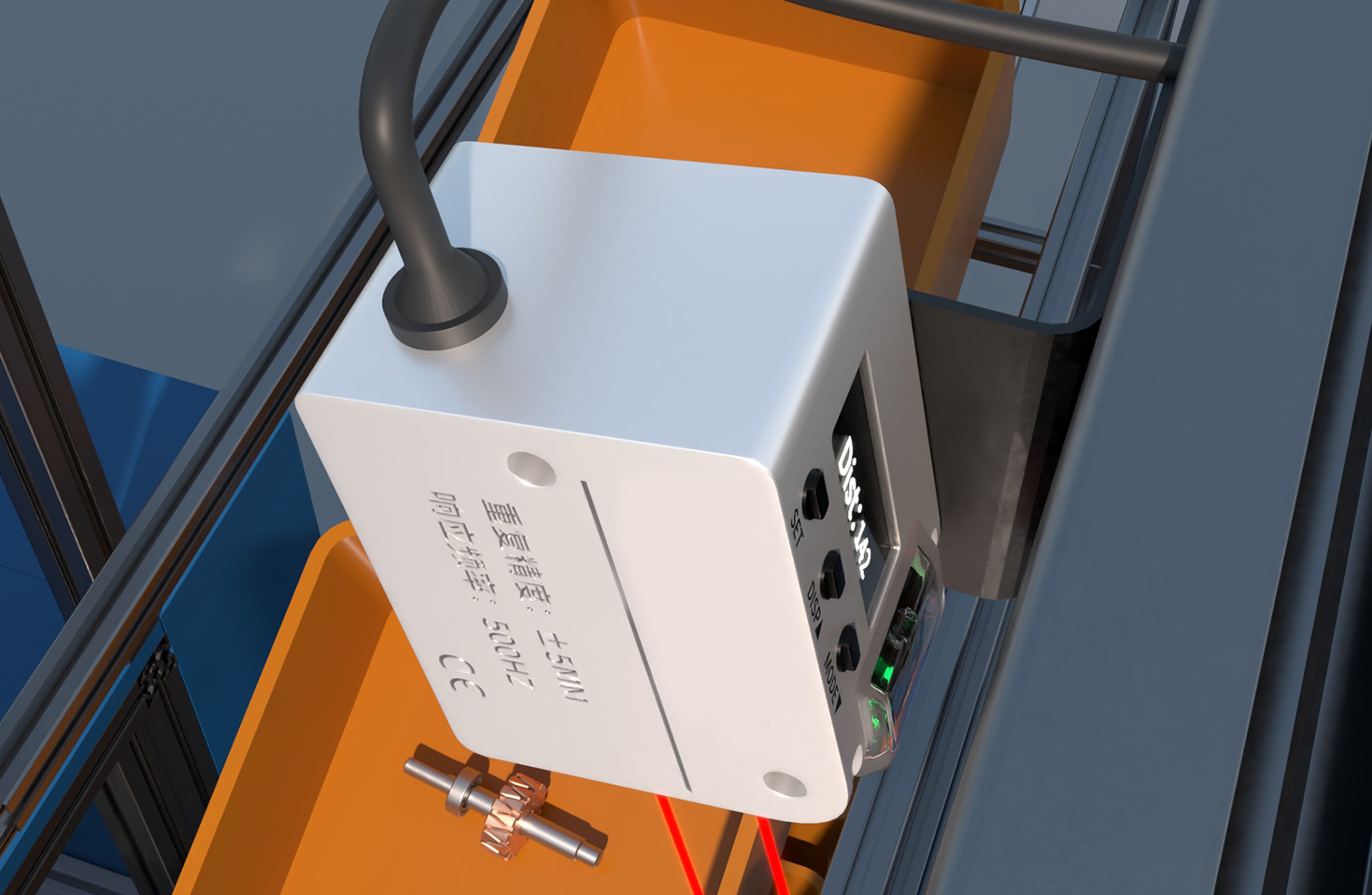
When selecting a transit time laser sensor for a specific application, several key parameters must be evaluated. The *measuring range* defines the minimum and maximum distances. The *accuracy* and *repeatability* specifications indicate the sensor's precision. The *laser class* (safety rating) and *outputs* (analog, digital, IO-Link, Ethernet) are crucial for system integration. Environmental ratings for *ingress protection* (IP code) and operational temperature ensure reliability in the intended setting. Finally, features like multi-echo detection and built-in evaluation functions can be decisive for complex tasks.
In conclusion, transit time laser sensors represent a powerful and versatile solution for long-range, non-contact measurement challenges. Their inherent robustness against target properties and environmental factors, combined with ongoing enhancements in speed, accuracy, and intelligence, solidifies their role as an indispensable tool for engineers and system integrators driving the evolution of Industry 4.0 and smart automation. As processing power increases and costs decrease, their adoption is set to expand into even broader fields, from autonomous vehicles to advanced robotics, continuing to transform how machines perceive and interact with the physical world.