Traffic monitoring systems have evolved significantly over the past decades, with laser sensors emerging as a pivotal technology for accurate and reliable data collection. Unlike traditional inductive loops or video-based systems, laser sensors, specifically Light Detection and Ranging (LiDAR) and laser rangefinders, offer high precision in vehicle detection, classification, and speed measurement, regardless of lighting or weather conditions. These sensors operate by emitting pulsed or continuous laser beams towards a target area, such as a traffic lane. The reflected signals are then analyzed to calculate distance, speed, and the physical dimensions of objects with centimeter-level accuracy. This capability is fundamental for modern Intelligent Transportation Systems (ITS), enabling real-time traffic flow analysis, congestion management, and enhanced road safety.
The core principle behind laser sensors in traffic applications is time-of-flight measurement. A laser diode emits a light pulse, which travels to a vehicle or object and reflects back to a detector. By precisely measuring the time taken for this round trip and knowing the speed of light, the system calculates the distance to the object. When multiple pulses are emitted in rapid succession, changes in distance over time are computed to determine speed and trajectory. Advanced multi-beam laser scanners can create detailed 3D point clouds of the monitored area, allowing for the distinction between different vehicle types—such as cars, trucks, and motorcycles—based on their height, width, and length profiles. This classification data is invaluable for traffic planning, infrastructure design, and enforcing vehicle-specific regulations.
One of the most significant advantages of laser sensors is their robustness in diverse environmental conditions. They perform consistently in darkness, fog, rain, and glare where camera-based systems often fail. Their active illumination source is not dependent on ambient light, ensuring 24/7 operational reliability. Furthermore, laser systems typically have a smaller physical footprint and can be installed on overhead gantries, poles, or roadside structures with minimal disruption to traffic. They are also less prone to privacy concerns compared to surveillance cameras, as they capture geometric and kinematic data rather than visual imagery.
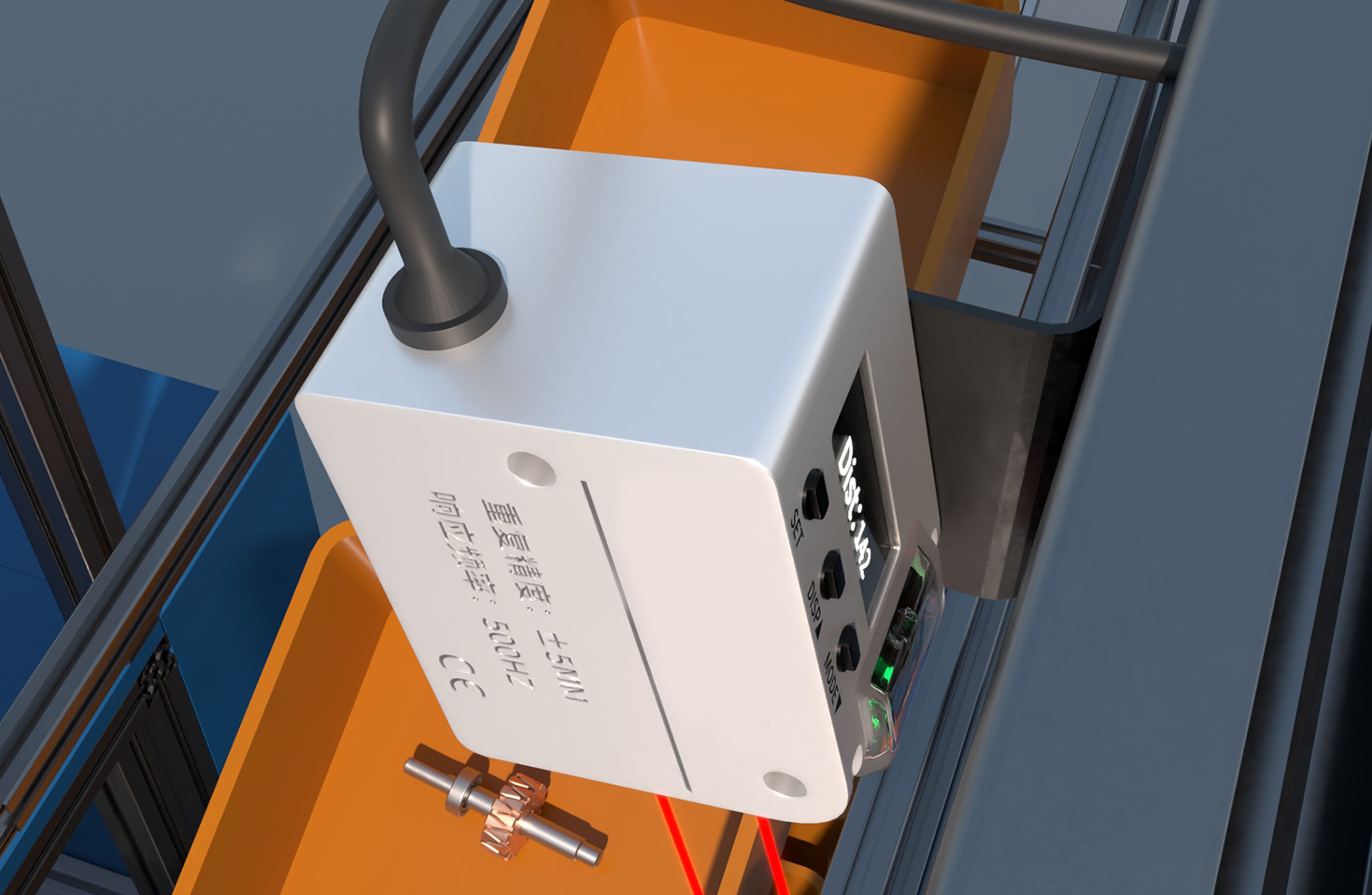
In practical applications, laser sensors are deployed for various traffic management functions. They are used for accurate vehicle counting at intersections, enabling adaptive traffic signal control that responds to real-time demand, thus reducing idle times and emissions. On highways, they facilitate section control for average speed measurement, contributing to speed limit enforcement and accident reduction. In toll collection systems, laser profiling ensures correct vehicle categorization for electronic tolling. Additionally, they play a critical role in incident detection by identifying stopped vehicles, wrong-way drivers, or debris on the road, triggering immediate alerts to traffic management centers.
The integration of laser sensor data with other ITS components, such as connected vehicle networks and cloud-based analytics platforms, is driving the future of smart mobility. Data from distributed laser sensors can be aggregated to provide a comprehensive view of network-wide traffic patterns, supporting predictive analytics for congestion and proactive maintenance scheduling. As autonomous vehicle technology advances, high-definition laser maps generated by these sensors will be essential for precise localization and navigation.

Despite their benefits, challenges remain, including the higher initial cost compared to some legacy systems and the need for periodic calibration to maintain accuracy. However, the long-term operational savings, reduced maintenance, and superior data quality are driving increased adoption. Ongoing advancements in solid-state LiDAR and the reduction in component costs are making this technology more accessible for widespread deployment in urban and rural traffic systems alike.
In conclusion, laser sensors represent a transformative technology for traffic monitoring, offering unparalleled accuracy, reliability, and functionality. Their ability to deliver detailed, real-time traffic data under all conditions makes them a cornerstone of efficient, safe, and intelligent transportation infrastructure, paving the way for smarter cities and improved mobility for all.