Distance sensors are integral components in modern laser marking systems, ensuring precision, consistency, and quality in industrial applications. These sensors measure the gap between the laser head and the workpiece surface, providing real-time feedback to the machine's control system. In laser marking, maintaining an optimal focal distance is critical because the laser beam must be sharply focused to achieve high-resolution marks, whether engraving serial numbers, barcodes, logos, or complex graphics on materials like metals, plastics, ceramics, or composites. Variations in surface height, warping, or uneven mounting can lead to defocusing, resulting in blurred marks, inconsistent depth, or even damage to the material. Distance sensors mitigate these issues by enabling dynamic adjustments, allowing the laser head to adapt to surface irregularities automatically.
There are several types of distance sensors commonly used in laser marking machines, each with distinct principles and advantages. Laser triangulation sensors are popular due to their high accuracy and speed. They work by projecting a laser spot onto the target surface, and a receiver detects the reflected light's position. Based on the angle of reflection, the sensor calculates the distance. These sensors offer resolutions in the micrometer range, making them suitable for fine engraving tasks. Another type is the confocal chromatic sensor, which uses white light and spectral analysis to measure distance. It is highly precise and effective on reflective or transparent surfaces, though it may be more expensive. Ultrasonic sensors, which use sound waves, are cost-effective for larger distances but generally offer lower accuracy, while inductive or capacitive sensors are used for specific conductive materials. The choice depends on factors like required precision, material properties, operating environment, and budget.
The integration of distance sensors enhances the functionality of laser marking machines in several ways. First, they enable autofocus capabilities, where the system automatically adjusts the Z-axis to maintain the correct focal plane. This is especially useful in batch processing with varying part heights or on curved surfaces. Second, sensors facilitate surface profiling, allowing the machine to map the workpiece topography before marking. This pre-scanning ensures that the laser path is optimized for uneven areas, improving mark quality. Third, in automated production lines, distance sensors contribute to faster setup times and reduced manual intervention, boosting overall efficiency. They also help in error detection—for instance, if a sensor detects an unexpected distance change, it can trigger an alarm or halt the process to prevent defects.
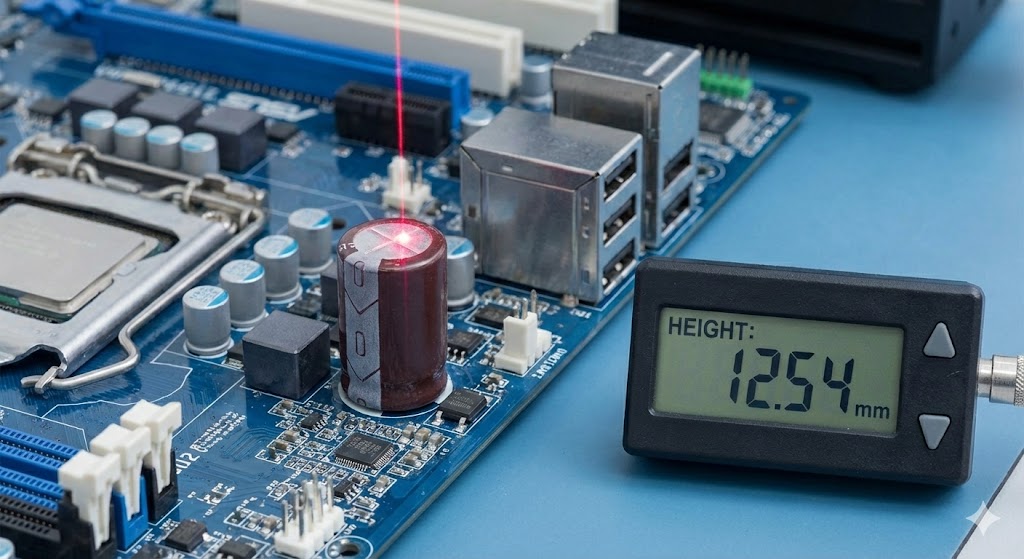
However, implementing distance sensors comes with challenges. Environmental factors like dust, smoke, or coolant fluids in industrial settings can interfere with optical sensors, requiring protective enclosures or regular maintenance. Material characteristics, such as reflectivity, color, or texture, may affect sensor performance; for example, dark or matte surfaces might absorb too much light, while shiny surfaces could cause glare. Calibration is crucial to ensure accuracy, and sensors must be compatible with the machine's software for seamless data processing. Advances in sensor technology, like integrated algorithms for noise reduction or adaptive filtering, are addressing these issues, making sensors more robust and versatile.
In practice, selecting and using a distance sensor involves careful consideration. Engineers should assess the marking application's requirements: for high-precision tasks like microelectronics or medical device marking, laser triangulation or confocal sensors are ideal. For larger-scale marking on rough surfaces, ultrasonic sensors might suffice. Installation positioning is also key—sensors should be mounted close to the laser head to minimize measurement errors. Regular testing with sample materials can verify performance. Additionally, many modern laser marking systems offer software features that leverage sensor data for advanced functions, such as 3D marking on contoured objects or real-time quality monitoring.
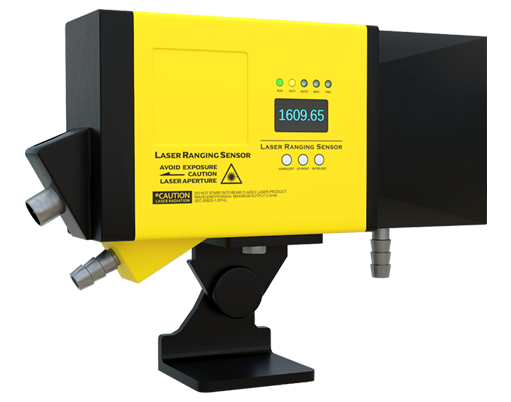
Looking ahead, trends in Industry 4.0 and smart manufacturing are driving further innovation in distance sensors for laser marking. Integration with IoT platforms allows for remote monitoring and predictive maintenance, where sensor data analytics can predict wear or calibration needs. Enhanced connectivity enables seamless communication with other machinery in a production cell, supporting adaptive processes. As laser marking expands into new areas like additive manufacturing or flexible electronics, sensors will continue to evolve, offering higher speeds, better resilience, and multi-sensor fusion for comprehensive control. Ultimately, distance sensors are not just add-ons but essential elements that elevate laser marking from a basic engraving tool to a sophisticated, reliable solution for modern industry.
In summary, distance sensors play a pivotal role in laser marking by ensuring accurate focus and adaptability. They improve mark quality, reduce waste, and increase productivity, making them invaluable in sectors from automotive to aerospace. By understanding their types, applications, and best practices, manufacturers can optimize their laser marking processes for superior results.