Proximity sensors have become indispensable components in today's industrial landscape, enabling automation, safety, and efficiency across diverse sectors. These non-contact detection devices, which utilize electromagnetic fields, infrared light, or ultrasonic sound to sense the presence or absence of objects, are fundamental to modern manufacturing and process control. Their application within industrial enterprises is vast and continually evolving, driven by the demands of Industry 4.0 and smart factory initiatives.
In manufacturing and assembly lines, inductive proximity sensors are extensively employed for precise metal object detection. They monitor the position of components on conveyor belts, verify the presence of parts in assembly jigs, and count metallic items with high reliability. This ensures seamless production flow and minimizes downtime caused by jams or missing parts. Capacitive sensors, capable of detecting both metallic and non-metallic materials, find critical use in packaging, food and beverage, and pharmaceutical industries. They can sense levels of liquids, granules, or powders through container walls, ensuring proper filling and preventing overflows, thereby maintaining product consistency and reducing waste.
Machine safety is another paramount domain. Safety-rated proximity sensors, often with redundant outputs and high diagnostic coverage, are integrated into safety light curtains and interlock guards on robotic cells, presses, and automated machinery. They help create safe working environments by ensuring dangerous machinery halts operation when a protective door is opened or when a worker breaches a predefined safety perimeter. This not only protects personnel but also helps enterprises comply with stringent international safety standards like ISO 13849.
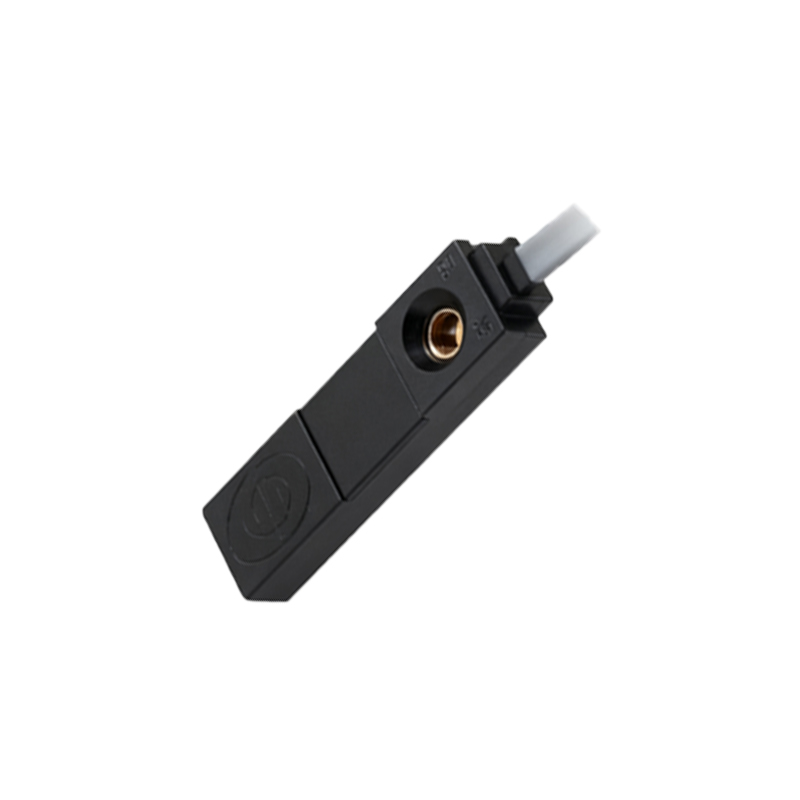
The automotive industry relies heavily on a multitude of proximity sensors. From verifying the correct positioning of engine blocks and chassis components during robotic welding to ensuring door panels are properly aligned for sealing, these sensors guarantee the precision required in high-volume production. In automated guided vehicles (AGVs) and warehouse robotics, sensors facilitate navigation, obstacle avoidance, and precise docking, optimizing logistics and material handling operations.
Furthermore, the integration of proximity sensors with Industrial Internet of Things (IIoT) platforms is a growing trend. Modern sensors with IO-Link or other digital communication protocols provide not just binary detection signals but also valuable diagnostic data, such as operating temperature, signal strength, and device health. This enables predictive maintenance, where potential sensor failures or process deviations can be identified and addressed before they cause production stoppages, leading to significant cost savings and enhanced operational intelligence.
The choice of sensor—inductive, capacitive, ultrasonic, or photoelectric—depends on specific application factors: target material, required sensing distance, environmental conditions (like dust, moisture, or temperature extremes), and response speed. Leading industrial enterprises work closely with sensor manufacturers and system integrators to design optimized solutions. For instance, in harsh foundry or welding environments, sensors with robust housings and high immunity to electromagnetic interference are selected.
In conclusion, proximity sensors are silent workhorses powering modern industrial automation. Their applications, from basic object detection to enabling complex, data-driven smart factory ecosystems, are critical for achieving goals of productivity, quality, safety, and agility. As industries advance towards greater connectivity and intelligence, the role of these versatile devices will only become more central, evolving in capability to meet the next generation of industrial challenges.