In the rapidly evolving landscape of industrial automation and precision measurement, large spot laser sensors have emerged as a critical technology for a wide range of applications. Unlike their focused, pinpoint counterparts, these sensors utilize a diffused or expanded laser beam, creating a larger measurement spot on the target surface. This fundamental characteristic unlocks unique advantages, particularly when dealing with challenging surfaces, dynamic processes, or applications requiring averaged measurements over an area.
The core operating principle of a large spot laser sensor typically involves triangulation or time-of-flight (ToF) methods, adapted for a broader beam. In triangulation-based sensors, a laser diode projects an expanded spot onto the target. The diffusely reflected light from this entire spot is collected by a receiving lens and focused onto a position-sensitive detector, such as a CCD or CMOS array. The displacement of the received light pattern correlates directly to the distance to the target. The key differentiator is that the sensor analyzes the centroid or the overall pattern shift of the large reflected spot, rather than a single point. This approach inherently averages out surface irregularities like roughness, texture, or minor imperfections, providing a more stable and representative distance or profile measurement. For ToF-based large spot sensors, the phase shift or flight time of the modulated laser light across the entire beam is measured, offering excellent performance for longer ranges and larger areas.
The advantages of employing a large spot laser sensor are significant in specific industrial contexts. First and foremost is their exceptional performance on rough, textured, or porous surfaces—such as cast metal, concrete, foam, or textiles. A small spot sensor might produce noisy, jumping readings as it hits peaks and valleys, whereas a large spot averages these variations, delivering a consistent and reliable signal. Secondly, they excel in measuring the position or vibration of objects with hot surfaces, such as molten glass or red-hot metal billets. The large spot minimizes the impact of heat haze (shimmer), which can severely distort the measurement path of a narrow beam. Furthermore, these sensors are ideal for applications involving translucent or transparent materials (e.g., glass, plastic films), where a small spot might partially reflect from the front and back surfaces, causing signal ambiguity. The large spot's diffuse reflection pattern is easier for the detector to interpret correctly. Finally, they offer enhanced stability for measuring moving or vibrating targets, as the larger spot acts as a spatial filter, reducing the effect of small-amplitude tremors.
Industrial applications are diverse and demanding. In the metals industry, large spot sensors are used for continuous casting mold level detection, hot slab profiling, and thickness gauging of rough rolled products. In automotive manufacturing, they measure body panel gaps and flushness, where paint texture and slight curvatures are present. The paper and film production sectors rely on them for precise web thickness monitoring and coating control. In logistics and warehousing, they facilitate pallet profiling and volume measurement systems. Additionally, they play a vital role in structural health monitoring, measuring deflection or vibration of large structures like bridges or wind turbine blades.
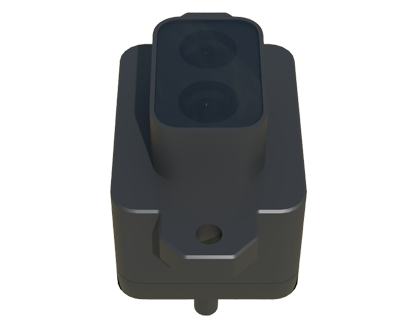
Selecting the appropriate large spot laser sensor requires careful consideration of several technical parameters. The spot size at a given working distance is paramount; it must be large enough to average the target's surface features but not so large as to lose resolution or exceed the target boundaries. Measurement range and stand-off distance define the operational envelope. Resolution and linearity indicate the sensor's precision and accuracy across its range. The response time or sampling rate must be compatible with the process speed. Environmental robustness is also critical; look for high Ingress Protection (IP) ratings for dust and water resistance, and ensure the laser class (typically Class 2 or Class 1) is safe for the operational environment. Compatibility with industrial communication protocols (IO-Link, analog outputs, Ethernet/IP, Profinet) is essential for system integration.
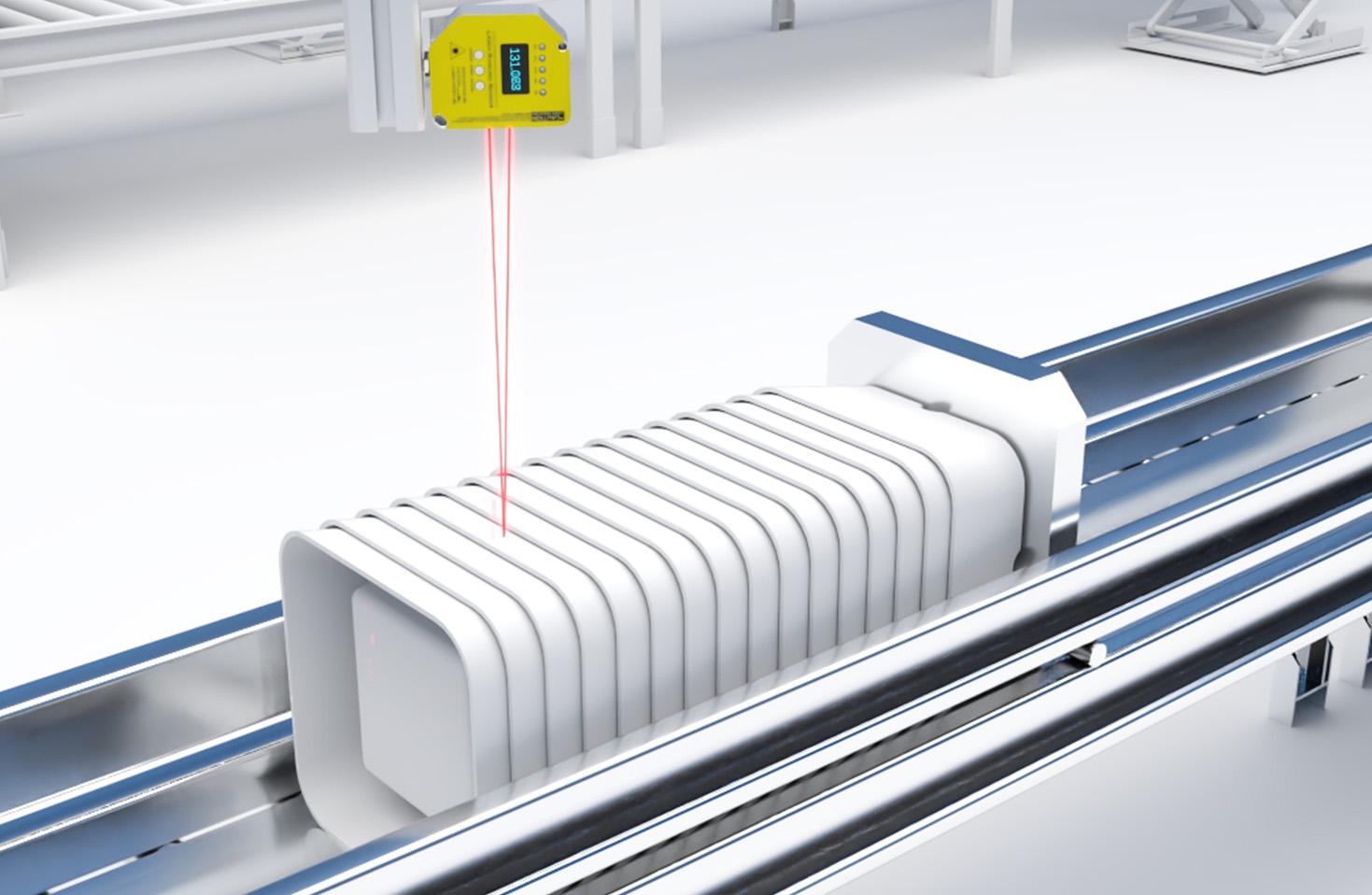
In conclusion, large spot laser sensors are not merely a variant of point sensors but a specialized solution designed to solve specific measurement challenges in industrial automation. Their ability to deliver stable, reliable data from difficult surfaces and under harsh conditions makes them indispensable in modern manufacturing, process control, and quality assurance systems. When surface characteristics pose a problem for conventional point sensors, the large spot approach often provides the elegant and effective solution, ensuring process reliability and enhancing overall product quality.