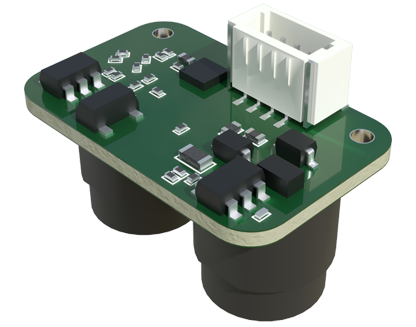
In the realm of industrial automation and precision manufacturing, the demand for high-accuracy, non-contact measurement and control systems has never been greater. Among the pivotal technologies enabling this advancement is the laser auto-focus sensor. This sophisticated device plays a critical role in applications ranging from semiconductor wafer inspection and PCB drilling to 3D surface profiling and robotic vision systems. Unlike traditional mechanical or capacitive sensing methods, laser auto-focus sensors offer unparalleled speed, precision, and reliability without physical contact, thereby eliminating the risk of surface damage or measurement inaccuracies due to probe wear.
The core operating principle of a laser auto-focus sensor is based on optical triangulation or confocal measurement techniques. In a typical triangulation-based sensor, a focused laser beam is projected onto the target surface. The reflected or scattered light from this point is then captured by a position-sensitive detector, such as a CCD or CMOS array. As the distance to the target changes, the position of the reflected light spot on the detector shifts accordingly. This displacement is precisely calculated by the sensor's internal processor to determine the exact distance to the target with micron or even sub-micron resolution. The "auto-focus" capability refers to the system's integrated feedback loop. This loop continuously adjusts the position of the focusing lens or the entire sensor head to maintain the laser spot at its optimal focus on the target surface, ensuring the highest possible signal quality and measurement accuracy regardless of surface variations or vibrations.
Confocal chromatic sensors represent another advanced variant. They utilize white light or multi-wavelength laser light passed through a special lens system. Only one specific wavelength is precisely focused on the target surface at a given distance. The reflected light of this wavelength is then analyzed by a spectrometer. By detecting this peak wavelength, the sensor can determine the absolute distance to the target with exceptional accuracy and is largely immune to surface reflectivity, color, or angle variations. This makes them ideal for measuring transparent materials, steep inclines, or highly reflective surfaces common in electronics manufacturing.
The integration of these sensors into automated systems brings transformative benefits. First and foremost is speed. Measurement cycles can be completed in milliseconds, enabling real-time process control and 100% inline inspection at high production line speeds. This is vital for industries like consumer electronics where throughput is paramount. Secondly, precision and repeatability are significantly enhanced. Modern laser auto-focus sensors can achieve linearity errors of less than 0.1% of the measuring range and repeatability in the nanometer range, ensuring consistent product quality. Thirdly, their non-contact nature makes them perfect for measuring delicate, soft, hot, or sterile surfaces that would be compromised by tactile probes.
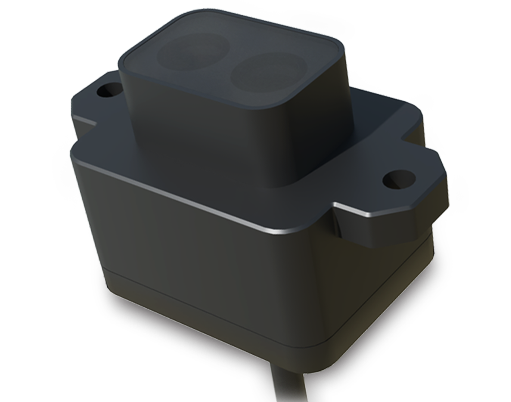
Key application areas are diverse. In semiconductor fabrication, they are indispensable for measuring photoresist thickness, wafer bow/warp, and critical dimensions during lithography. In precision machining, they provide real-time height feedback for laser cutting, drilling, and engraving systems, ensuring consistent depth control. For 3D scanning and metrology, arrays of these sensors can rapidly capture detailed surface topographies for reverse engineering or quality assurance. Furthermore, they are increasingly deployed in automated optical inspection (AOI) systems to detect soldering defects, component coplanarity, and assembly errors on circuit boards.
When selecting a laser auto-focus sensor for a specific application, several technical parameters must be carefully evaluated. The measuring range defines the minimum and maximum distances over which the sensor can operate accurately. The spot size, determined by the laser wavelength and optics, affects lateral resolution and the ability to measure small features. Sampling rate dictates how quickly distance data can be acquired and output. Environmental robustness, including resistance to ambient light, dust, and temperature fluctuations, is crucial for harsh industrial environments. Finally, the choice of interface—analog voltage, digital (RS-232, USB), or industrial fieldbus (EtherCAT, PROFINET)—determines how seamlessly the sensor integrates with PLCs, robots, and data acquisition systems.
Looking ahead, the evolution of laser auto-focus sensors is closely tied to trends in Industry 4.0 and smart manufacturing. Future developments will likely focus on miniaturization, enabling integration into tighter spaces, and enhanced data intelligence. Sensors with built-in edge computing capabilities could perform preliminary data analysis, such as pass/fail decisions or statistical process control, directly at the point of measurement, reducing latency and central processor load. Furthermore, the fusion of laser displacement data with 2D visual data from cameras is creating more powerful multi-sensor inspection modules.
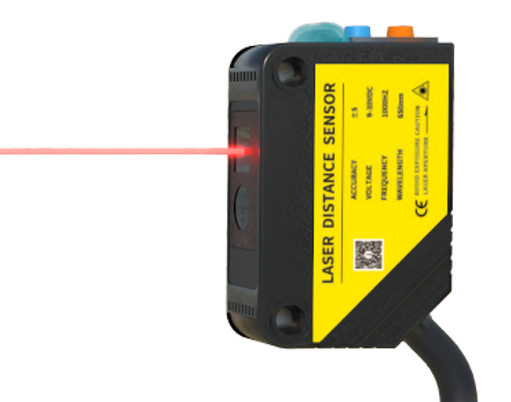
In conclusion, laser auto-focus sensors are a cornerstone technology for modern precision automation. By providing fast, accurate, and reliable non-contact distance and height measurements, they empower manufacturers to achieve new levels of quality control, process efficiency, and product innovation. As industrial tasks become more complex and tolerances tighter, the role of these intelligent optical sensors will only continue to expand, driving forward the capabilities of automated systems across the global manufacturing landscape.