Magnetic proximity sensors are widely used in industrial automation, automotive systems, and consumer electronics for non-contact detection of ferromagnetic objects. These devices operate based on fundamental electromagnetic principles, offering reliability and durability in various environments. Understanding their working mechanism provides insight into their selection and application across different fields.
At the core of a magnetic proximity sensor is the Hall effect or magnetoresistive principle. The Hall effect, discovered by Edwin Hall in 1879, involves generating a voltage difference across an electrical conductor when a magnetic field is applied perpendicular to the current flow. In modern sensors, a semiconductor-based Hall element produces an output voltage proportional to the magnetic field strength. When a ferromagnetic target, such as a steel gear or actuator, approaches the sensor, it alters the local magnetic field, triggering a detectable signal. Alternatively, magnetoresistive sensors change their electrical resistance in response to magnetic fields, providing high sensitivity for precise measurements.
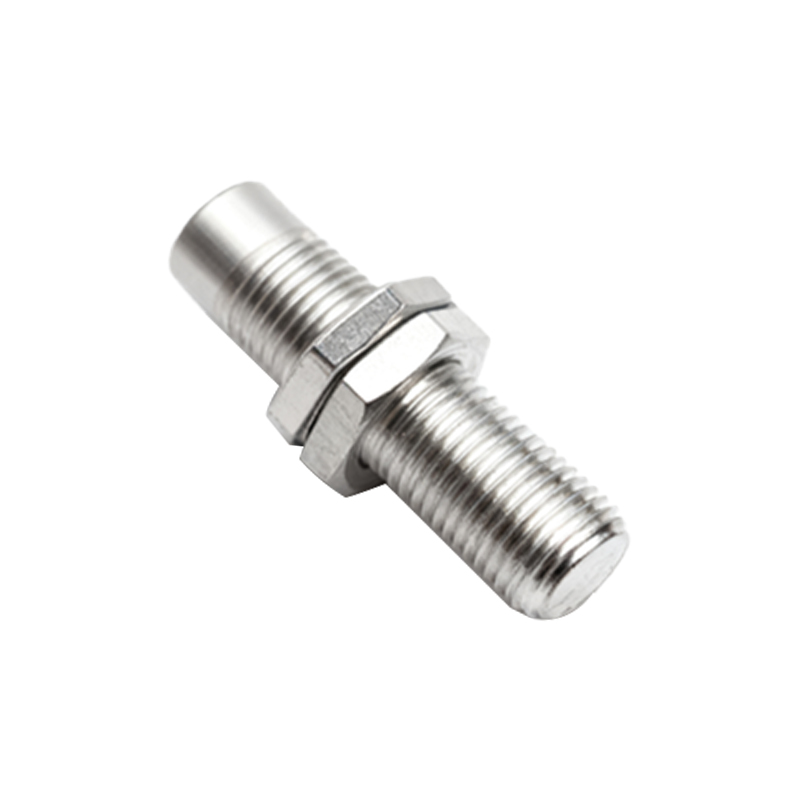
The typical construction includes a sensing element, signal conditioning circuitry, and an output stage. The sensing element, often a Hall-effect IC or magnetoresistor, converts magnetic variations into electrical signals. Conditioning circuits amplify and filter these signals to reduce noise, ensuring stable operation. The output stage may provide digital signals (e.g., open-collector or push-pull) or analog signals (e.g., voltage or current outputs), depending on the application requirements. For instance, digital outputs are common in position sensing for switches, while analog outputs suit speed monitoring in rotational systems.
Key advantages of magnetic proximity sensors include non-contact operation, which eliminates mechanical wear and extends lifespan. They function effectively in harsh conditions, such as extreme temperatures, dust, or moisture, as the sensing element can be sealed within a protective housing. Additionally, they offer fast response times, often in microseconds, making them suitable for high-speed applications like counting or speed detection in conveyor belts. Compared to inductive or capacitive sensors, magnetic variants specifically target ferrous materials, reducing false triggers from non-metallic objects.
Applications span diverse industries. In automotive systems, they monitor wheel speed for anti-lock braking systems (ABS) and detect gear positions in transmissions. Industrial automation uses them for limit switching, valve position sensing, and motor control. Consumer electronics, like laptops and smartphones, employ miniature versions for lid closure detection. Emerging trends include integration with IoT for predictive maintenance, where sensors transmit real-time data to monitor equipment health.
When selecting a magnetic proximity sensor, factors like sensing distance, magnetic field strength, and environmental compatibility must be considered. Proper installation ensures optimal performance, as misalignment or interference from other magnetic sources can affect accuracy. Regular calibration may be needed in precision applications to maintain consistency.
In summary, magnetic proximity sensors leverage electromagnetic phenomena to enable efficient, contactless detection. Their robustness and versatility make them indispensable in modern technology, from factory floors to everyday devices. As innovation continues, advancements in materials and miniaturization are expected to enhance their capabilities further.