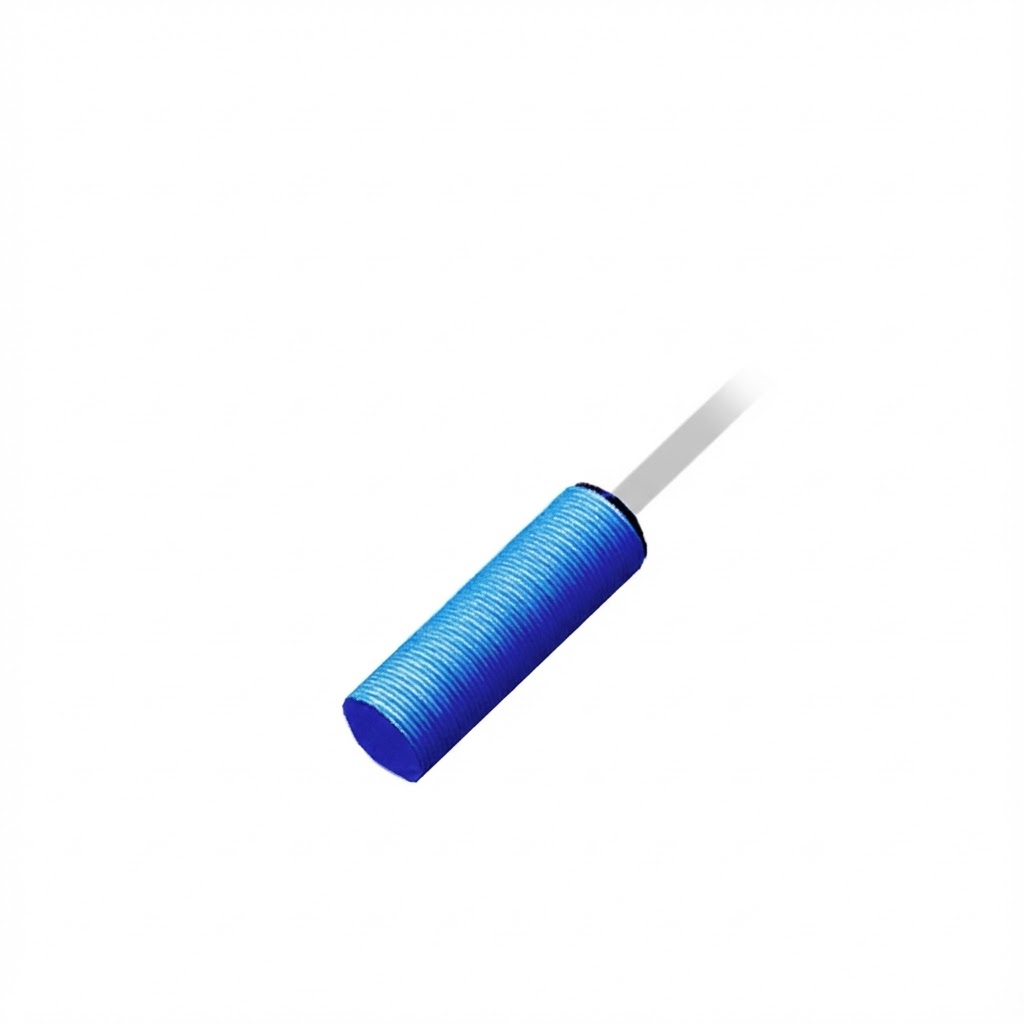
M18 Flush Capacitive Proximity Sensor
✨Features
Product Introduction
The M18 Long-Body Flush Proximity Sensor is a specialized sensing solution for applications requiring both durability and installation flexibility. Its extended 80mm housing allows for secure mounting in deep brackets or through thick machine frames where standard short sensors cannot reach.
With a 5mm sensing range, it provides reliable detection for metallic targets. The sensor offers versatile housing material options, including PTFE (Teflon) for superior chemical resistance in wash-down or processing applications. Rated IP67 and equipped with comprehensive circuit protection, it ensures long-lasting performance in harsh industrial environments (-25 C to +60 C).
Size and Structure
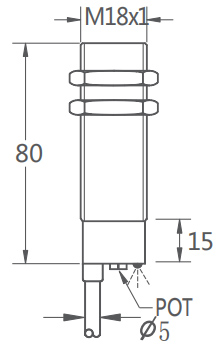
Circuit diagram

| Parameter | Specification |
|---|---|
| Housing Size | M18 x 80 mm |
| Mounting | Flush (Shielded) |
| Sensing Distance (Sn) | 5.0 mm |
| Output Configuration | NPN / PNP (Selectable) |
| Switching Logic | NO / NC (Selectable) |
| Operating Voltage | 10 ... 30 VDC |
| Load Current | <= 200 mA |
| Current Consumption | <= 15 mA |
| Residual Voltage | <= 2.5 V |
| Switching Frequency | 100 Hz |
| Switching Point Drift | <= +/- 10% |
| Hysteresis | 3 ... 20% |
| Repeat Accuracy | <= 3% |
| Protection Circuit | Surge, Overload, Short-circuit, Reverse Polarity |
| Housing Material | Metal / Plastic / PTFE (Selectable) |
| Connection | 2m PVC Cable |
| Indicator | Yellow LED |
| Ambient Temperature | -25 C ... +60 C |
| Ambient Humidity | 35 - 95% RH |
| Protection Degree | IP67 |
FAQ
Q:Why choose the "Long Body" (80mm) version?
A:What is the advantage of the 80mm length over the standard 50mm? A: The extra length allows the sensor to pass through thicker mounting plates or double-walled machine guards. It also provides more room for the mounting nuts to grip, making physical adjustment of the sensor position easier in cramped spaces.
Q:When is the PTFE housing necessary?
A:You should choose the PTFE (Teflon) option if the sensor will be exposed to acids, alkalis, or solvents (common in chemical plants or food processing wash-downs). PTFE is chemically inert and non-stick, whereas metal housings can corrode or pit in these environments.
Q:Can I mount this sensor surrounded by metal?
A:Yes. This is a Flush (Shielded) model. You can bury it completely in a metal block up to the sensing face. This protects the sensor from damage and allows for a neat, low-profile installation.
Related Recommendations
