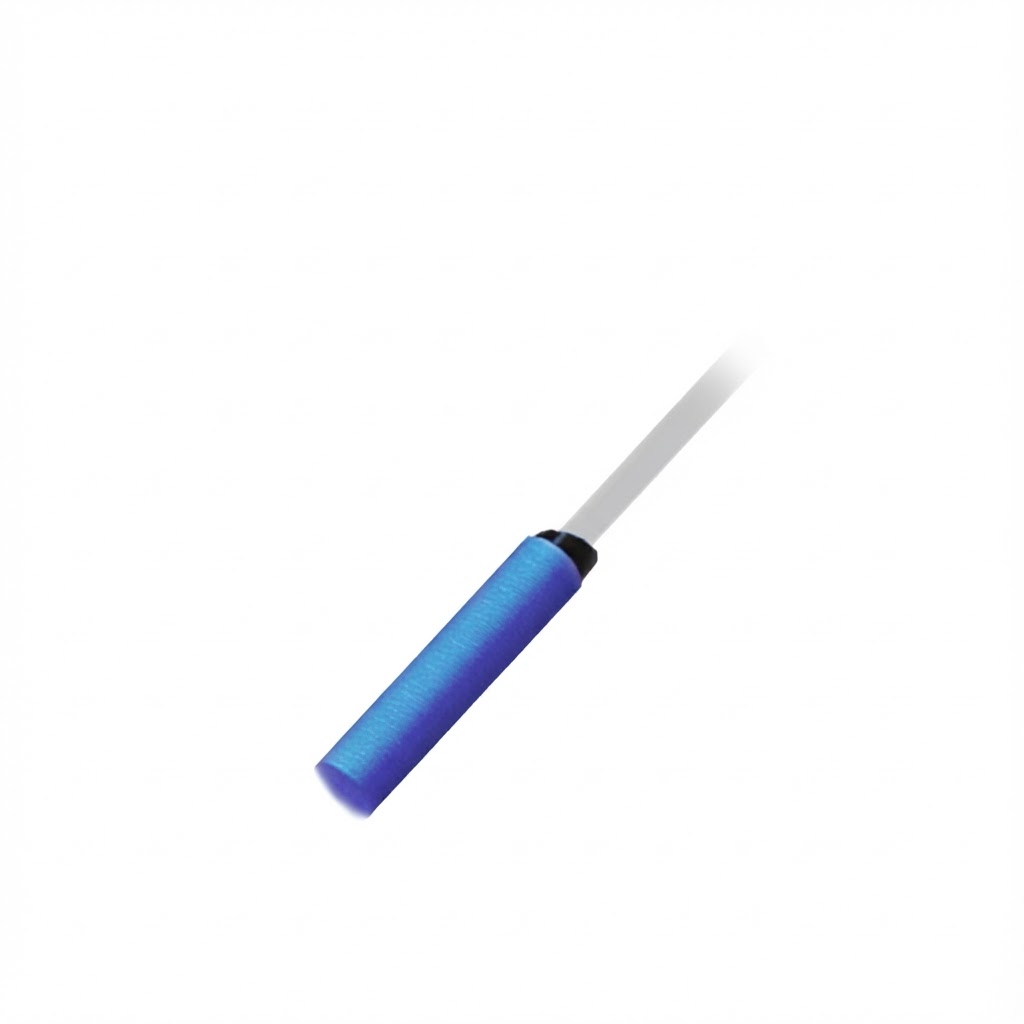
M8 Flush Capacitive Proximity Sensor
✨Features
Product Introduction
The M8 Flush Proximity Sensor is a compact and durable position sensor designed for precision automation. Its Flush (Shielded) design allows for low-profile installation, where the sensor face sits flush with the mounting surface, protecting it from side impacts.
With a 1.0 mm sensing distance, it is ideal for detecting the end-of-stroke in small pneumatic cylinders or confirming the closure of grippers. The sensor is available with a specialized PTFE housing option, providing an excellent solution for the chemical, pharmaceutical, and food processing industries. Operating on 10-30V DC with a straightforward NPN or PNP output, it integrates seamlessly into standard industrial control systems.
Size and Structure
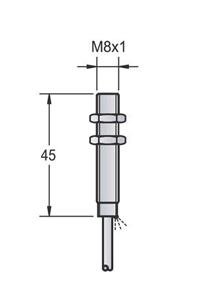
Circuit diagram

| Parameter | Specification |
|---|---|
| Housing Size | M8 x 45 mm |
| Mounting | Flush (Shielded) |
| Sensing Distance (Sn) | 1.0 mm |
| Output Configuration | NPN / PNP (Selectable) |
| Switching Logic | NO / NC (Selectable) |
| Operating Voltage | 10 ... 30 VDC |
| Load Current | <= 200 mA |
| Current Consumption | <= 15 mA |
| Residual Voltage | <= 2.5 V |
| Switching Frequency | 100 Hz |
| Switching Point Drift | <= +/- 10% |
| Hysteresis | 3 ... 20% |
| Repeat Accuracy | <= 3% |
| Protection Circuit | Surge, Overload, Short-circuit, Reverse Polarity |
| Housing Material | Metal / Plastic / PTFE (Selectable) |
| Connection | 2m PVC Cable |
| Indicator | Yellow LED |
| Ambient Temperature | -25 C ... +60 C |
| Protection Degree | IP67 |
FAQ
Q:What is the difference between this "Flush" model and the previous "Non-Flush" one?
A:Flush (Shielded): The sensor can be buried in metal up to its face. It has a shorter range (1mm) but is mechanically better protected and can be mounted side-by-side with other sensors.
Non-Flush (Non-Shielded): The sensor head must protrude from the metal. It has a longer range (2mm) but is more exposed to physical damage.
Q:The spec says 100 Hz. Is that fast enough for my application?
A:100 Hz means it can switch on/off 100 times per second. This is perfectly adequate for:
Presence detection (is the part there?)
End-stop limit switching (conveyors, cylinders)
Slow-moving cams (< 6000 RPM with single target)
Note: It is NOT suitable for high-speed gear tooth counting.
Q:Why would I choose the PTFE housing option?
A:PTFE (Teflon) is non-stick and chemically resistant. You should choose this if your machine is cleaned with harsh chemicals (acids/caustics) or if sticky substances (glues, paints) might build up on the sensor face. Standard metal or plastic sensors might corrode or fail in these conditions.
Related Recommendations
