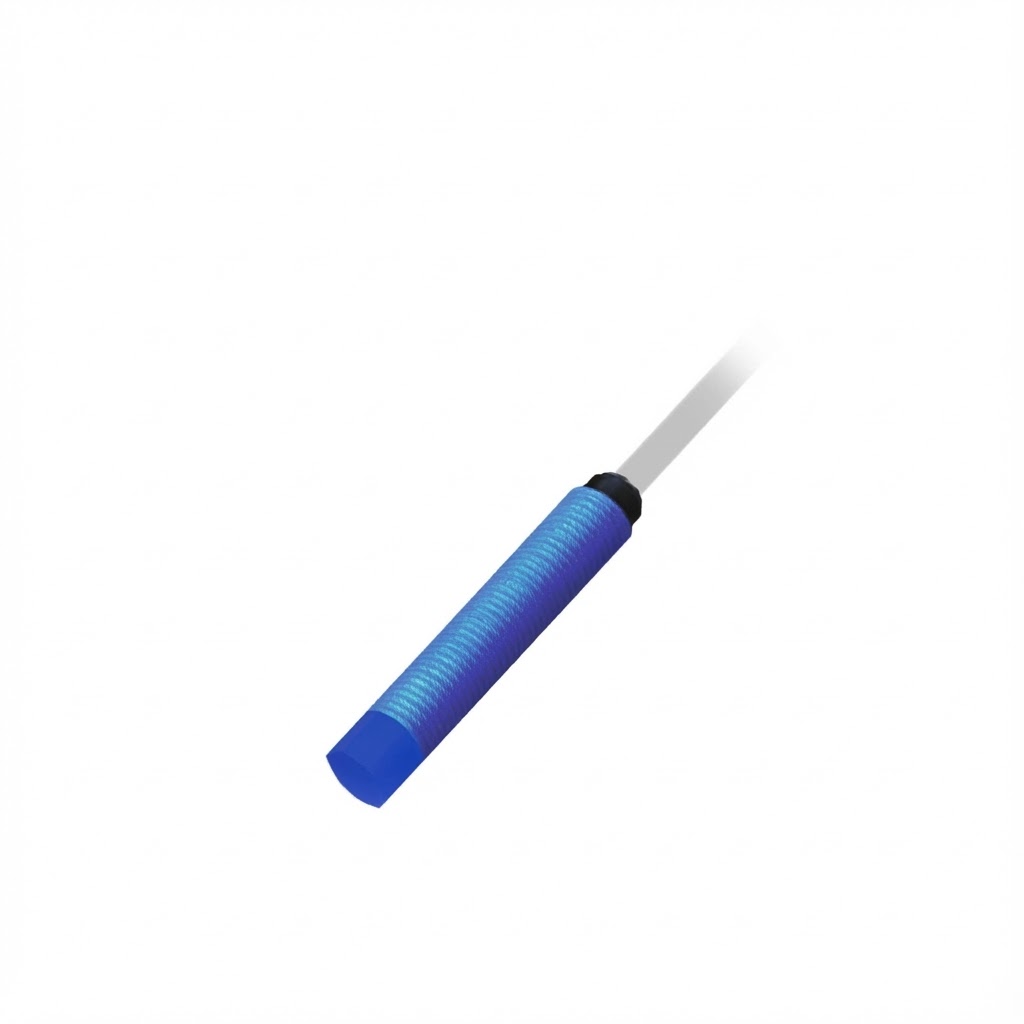
M8 Non-Flush Capacitive Proximity Sensor
✨Features
Product Introduction
The M8 Non-Flush Proximity Sensor is a compact sensing solution designed for applications requiring specific material compatibility. With a 2mm sensing distance in an M8 form factor, it fits into tight spaces in automated machinery.
A standout feature of this series is the optional PTFE (Teflon) housing, which provides superior resistance to aggressive chemicals, making it ideal for the chemical processing, pharmaceutical, and food industries. Rated IP67 and equipped with comprehensive circuit protection (Surge, Short-Circuit, Reverse Polarity), it ensures long-term reliability. The sensor operates with a switching frequency of 100 Hz, providing steady and accurate position feedback for gates, valves, and level detection systems.
Size and Structure
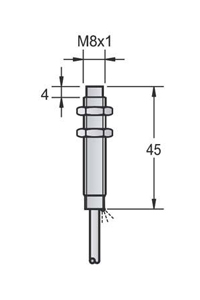
Circuit diagram

| Parameter | Specification |
|---|---|
| Housing Size | M8 x 45 mm |
| Mounting | Non-Flush (Non-Shielded) |
| Sensing Distance (Sn) | 2.0 mm |
| Output Configuration | NPN / PNP (Selectable) |
| Switching Logic | NO / NC (Selectable) |
| Operating Voltage | 10 ... 30 VDC |
| Load Current | <= 200 mA |
| Current Consumption | <= 15 mA |
| Residual Voltage | <= 2.5 V |
| Switching Frequency | 100 Hz |
| Switching Point Drift | <= +/- 10% |
| Hysteresis | 3 ... 20% |
| Repeat Accuracy | <= 3% |
| Protection Circuit | Surge, Overload, Short-circuit, Reverse Polarity |
| Housing Material | Metal / Plastic / PTFE (Selectable) |
| Connection | 2m PVC Cable |
| Indicator | Yellow LED |
| Ambient Temperature | -25 C ... +60 C |
| Ambient Humidity | 35 - 95% RH |
| Protection Degree | IP67 |
FAQ
Q:What does "Non-Flush" mean for installation?
A:Non-Flush (or Non-Shielded) means the sensing coil is exposed and not surrounded by the metal housing. You cannot mount this sensor completely embedded in a metal block. You must leave a "clear zone" (usually 2-3 times the sensing distance) around the sensor head to prevent the surrounding metal from triggering the sensor falsely.
Q:When should I choose PTFE over Metal?
A:Choose Metal (Stainless/Brass) for general automation where mechanical strength is needed. Choose PTFE (Teflon) if the sensor will be exposed to corrosive acids, alkalis, or cleaning agents, such as in chemical processing plants or wash-down areas. PTFE is chemically inert but mechanically softer than metal.
Q:Can I use this for counting fast-spinning gears?
A:Likely not. The switching frequency is 100 Hz, which means it can switch on/off 100 times per second. While fast enough for conveyor belts or piston detection, it is too slow for high-speed gear tooth counting (which often requires 1000Hz+). This sensor is best for position detection rather than speed measurement.
Related Recommendations
