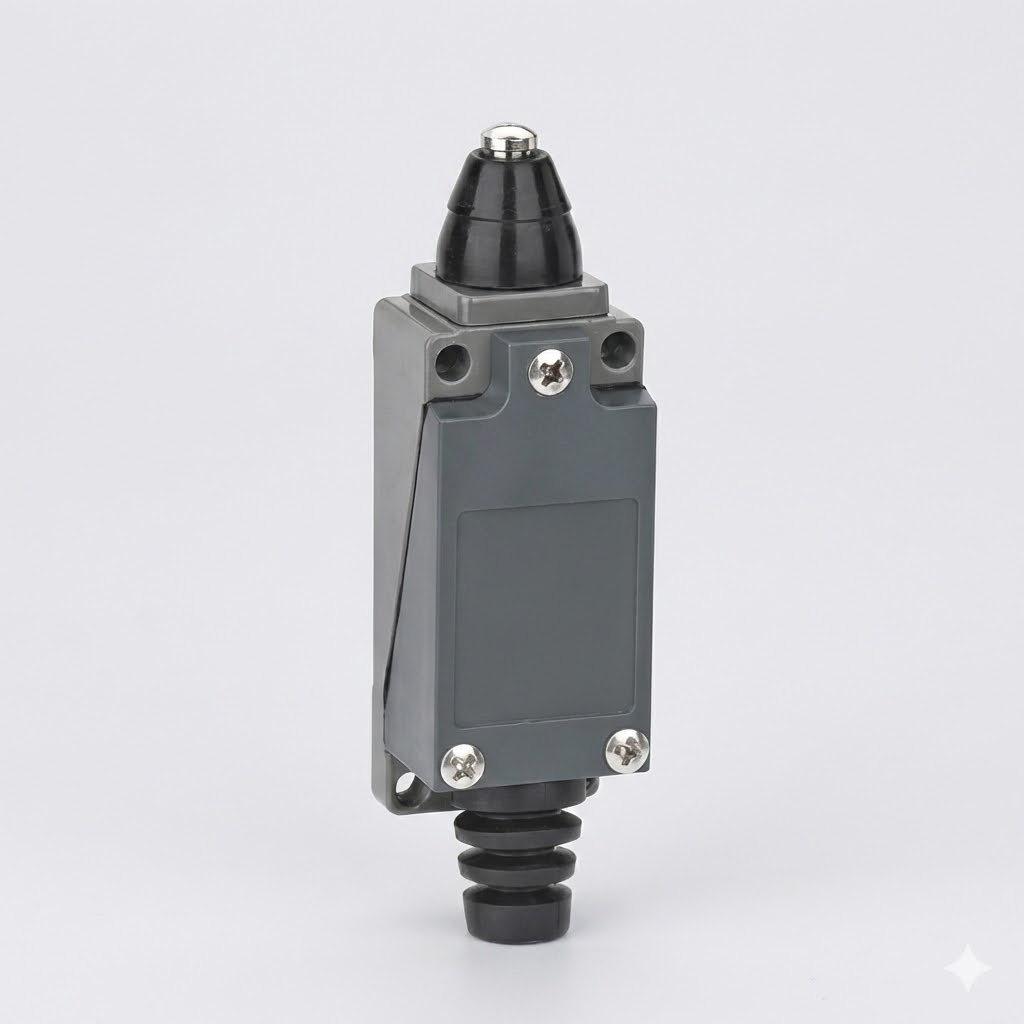
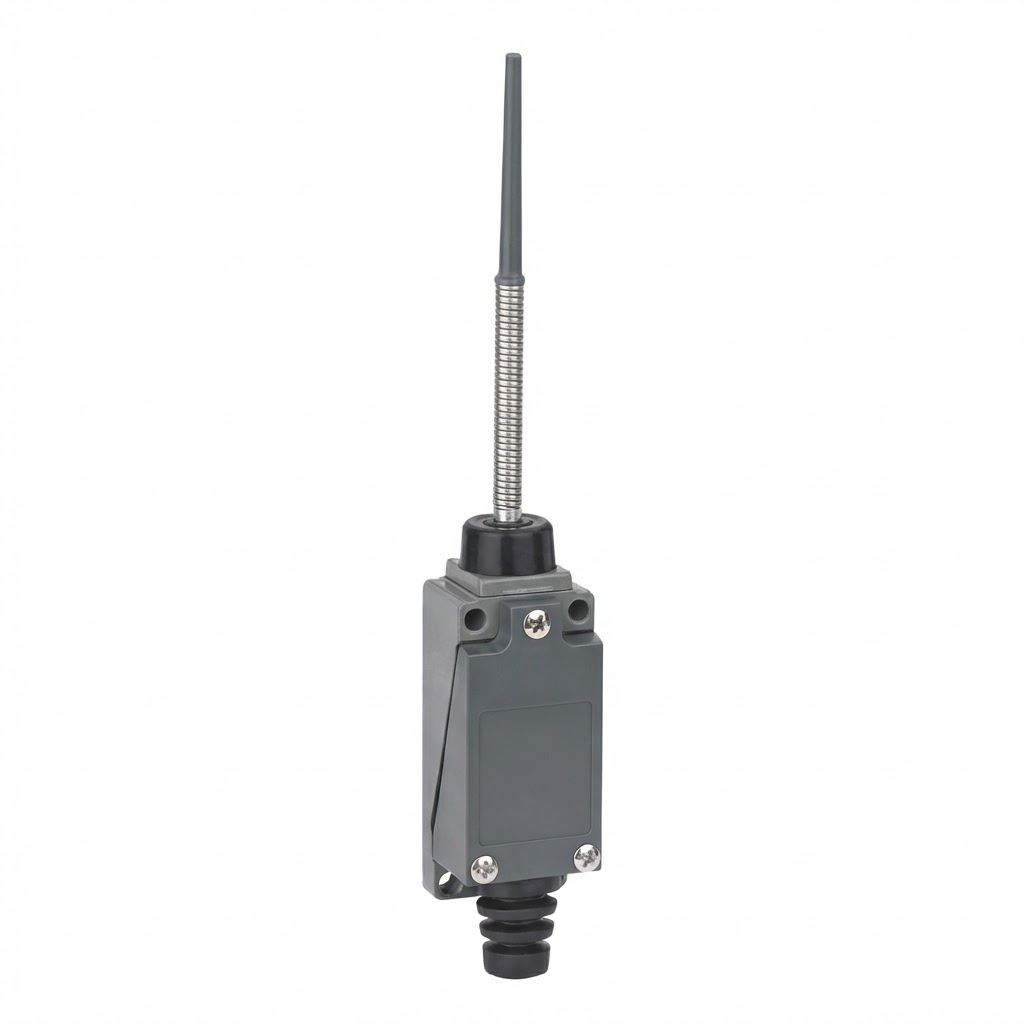
General Purpose Industrial Limit Switch (Rotary & Plunger Types)
✨Features
Operating Characteristics
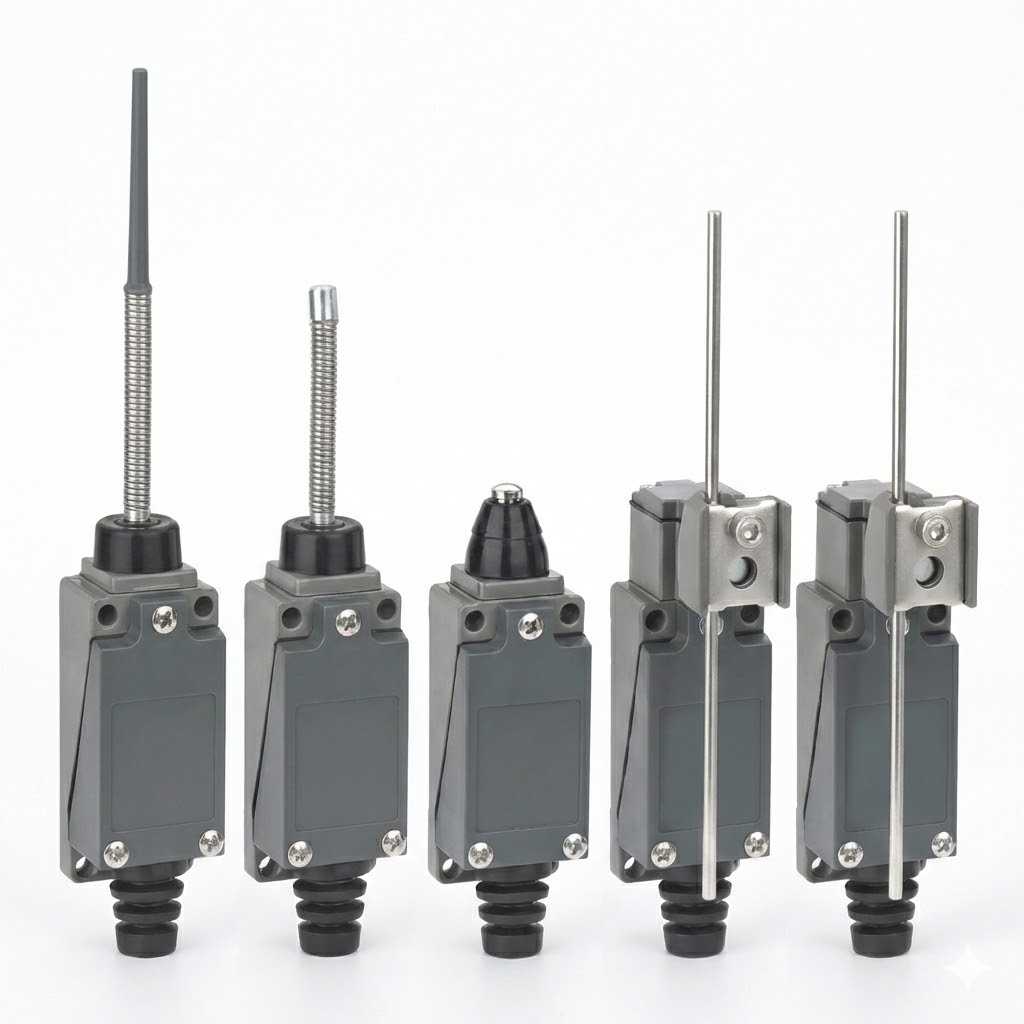
Performance data by actuator type.
| Actuator Type | Operating Force (OF) Max | Pre-travel (PT) Max | Total Travel (TT) |
| Rotary Roller Arm | 12 N | 35° | 105° |
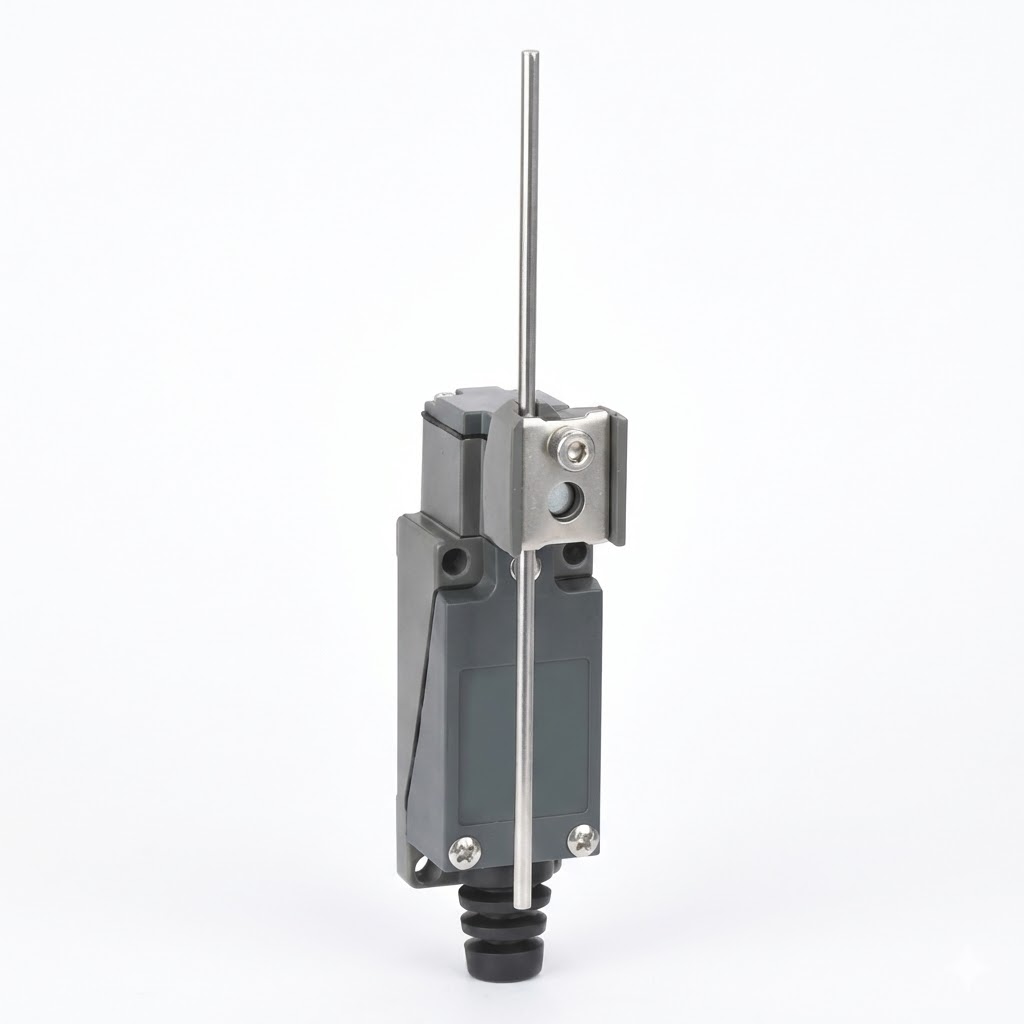
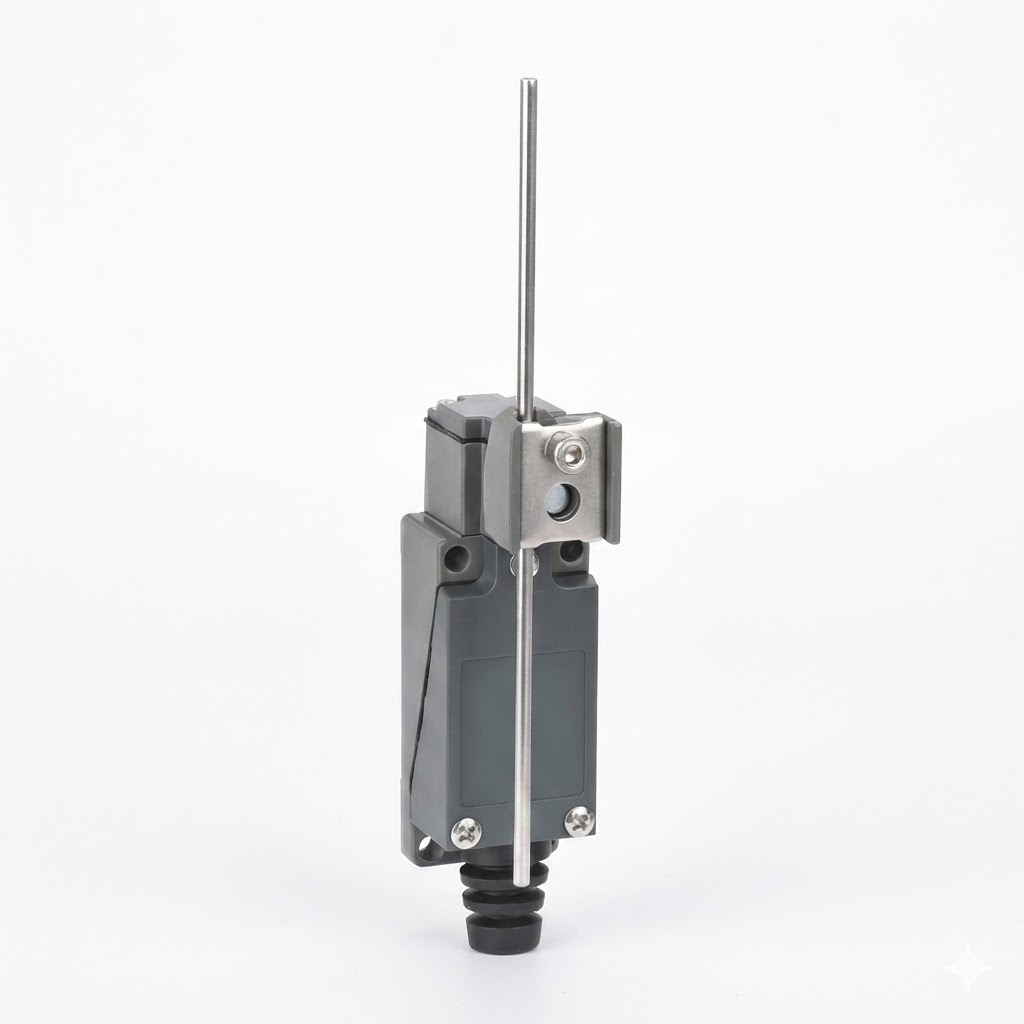
| Adjustable Rod Lever | 12 N | 35° | 105° |
| Adjustable Roller Arm | 12 N | 35° | 105° |
| Top Plunger | 15 N | 5 mm | 7 mm |
| Roller Plunger (Horizontal/Vertical) | 20 N | 5 mm | 7 mm |
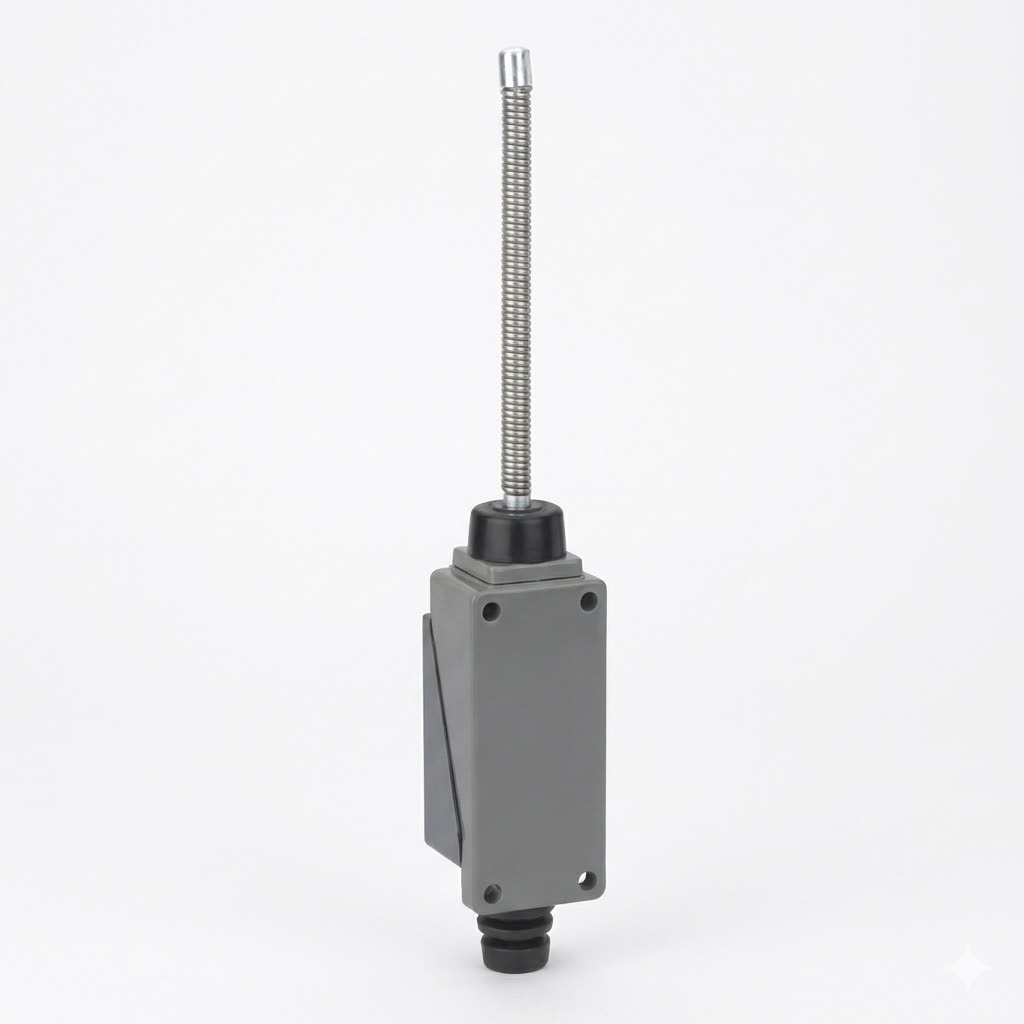
| Universal Flexible Rod (Coil Spring) | 12 N | 35° | - |
| Universal Cat Whisker | 12 N | 35° | - |
Product Introduction
General Purpose Industrial Limit Switches (IEC 60947-5-1 Compliant)
This series of limit switches is designed for reliable motion control in industrial automation circuits. Suitable for AC 50Hz circuits up to 380V and DC circuits up to 220V, these switches serve critical functions including travel control, direction change, and automatic limitation of moving mechanisms.
Built to meet GB/T 14048.5 and IEC 60947-5-1 standards, this series offers a wide variety of actuator heads—including rollers, plungers, and universal rods—making it an ideal choice for machine tools and automatic control systems.
Size and Structure
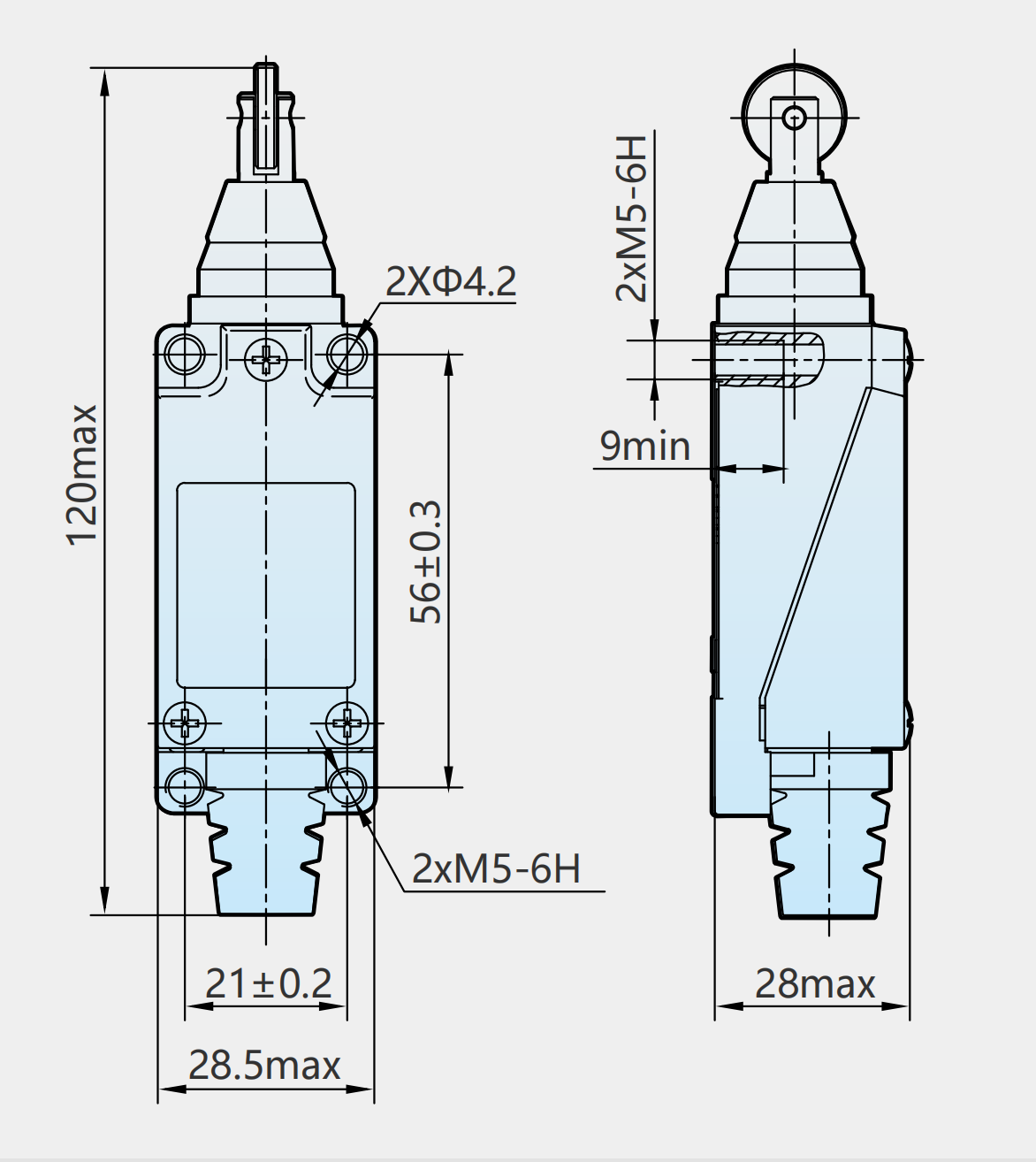
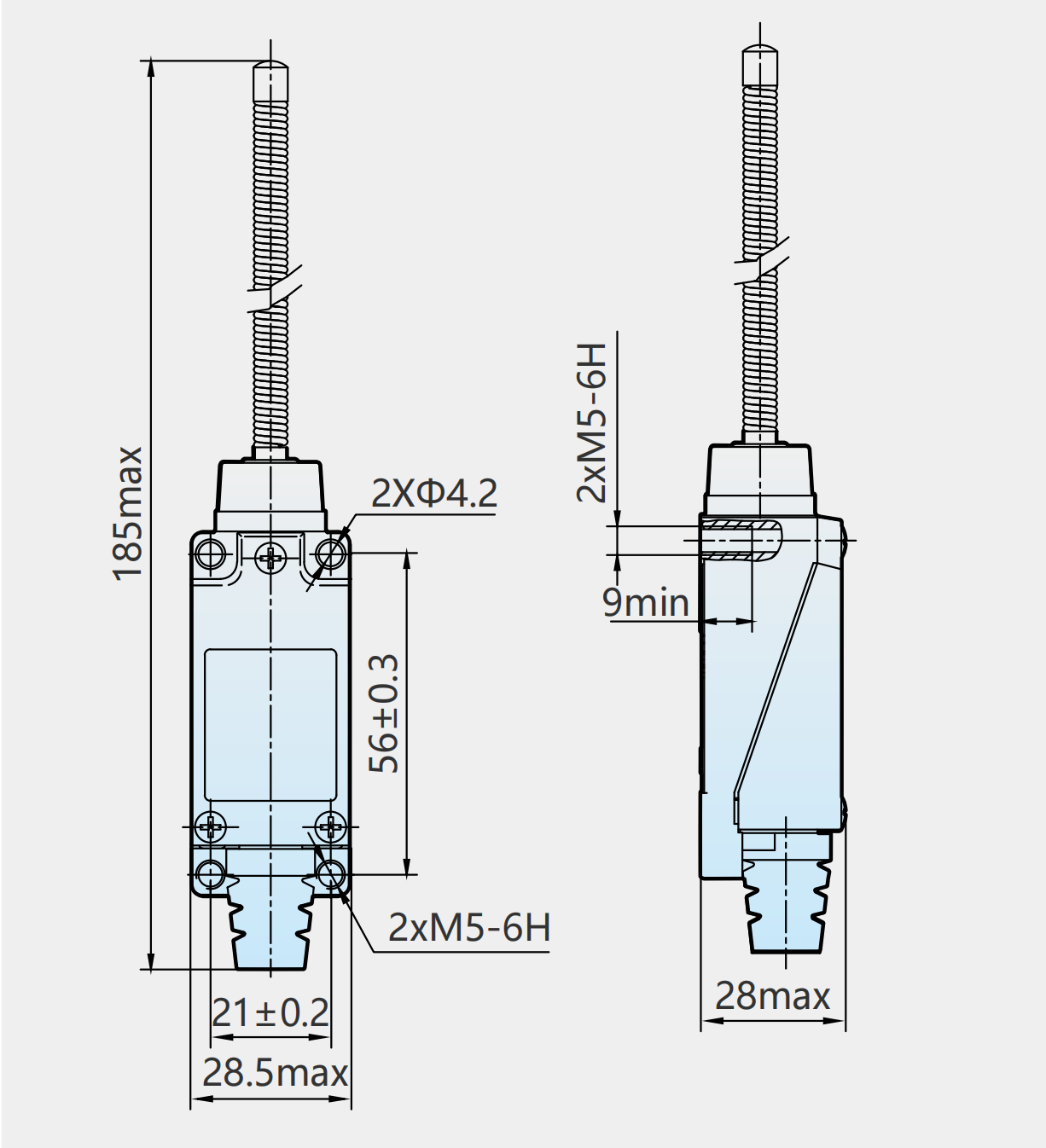
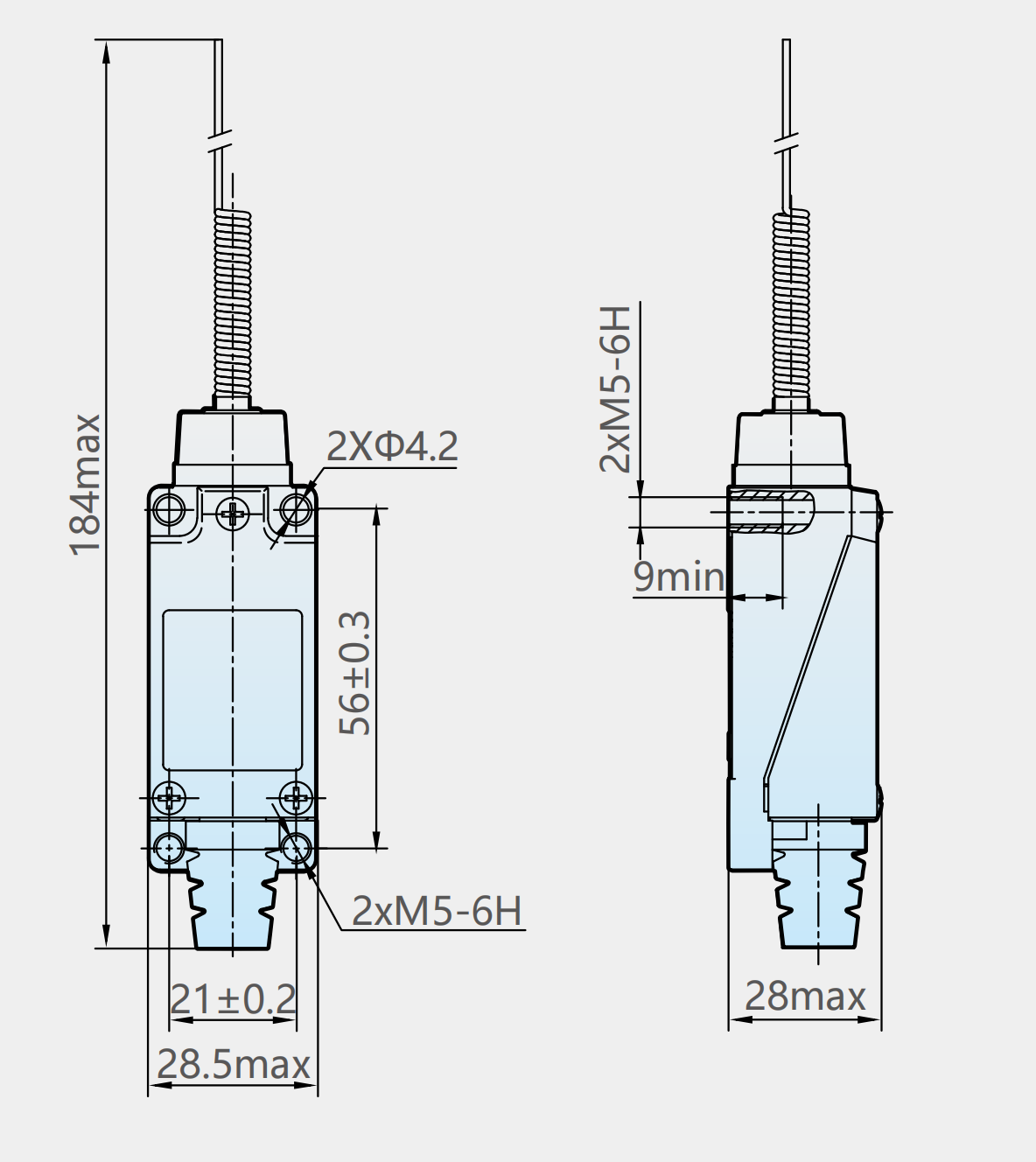
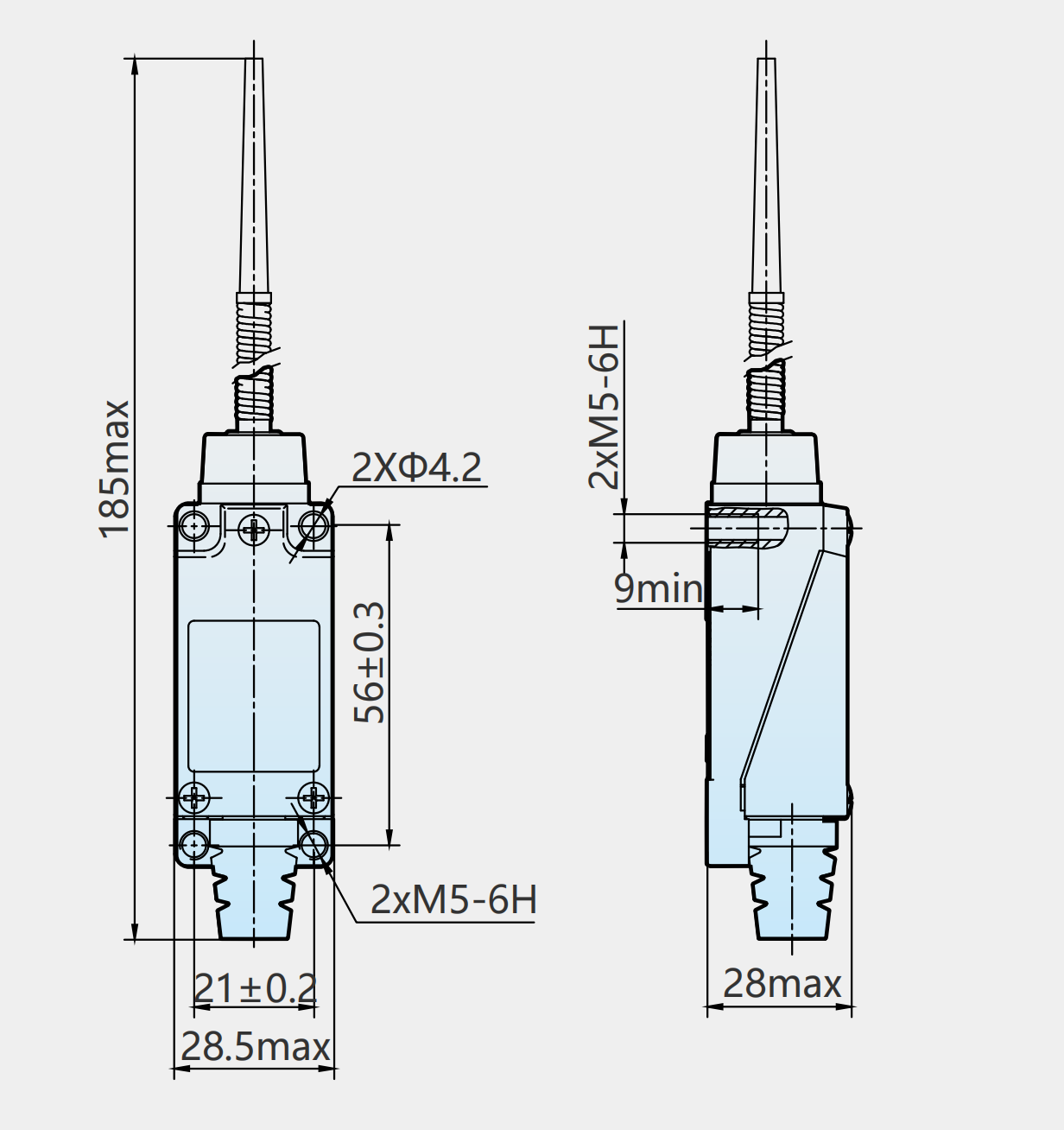
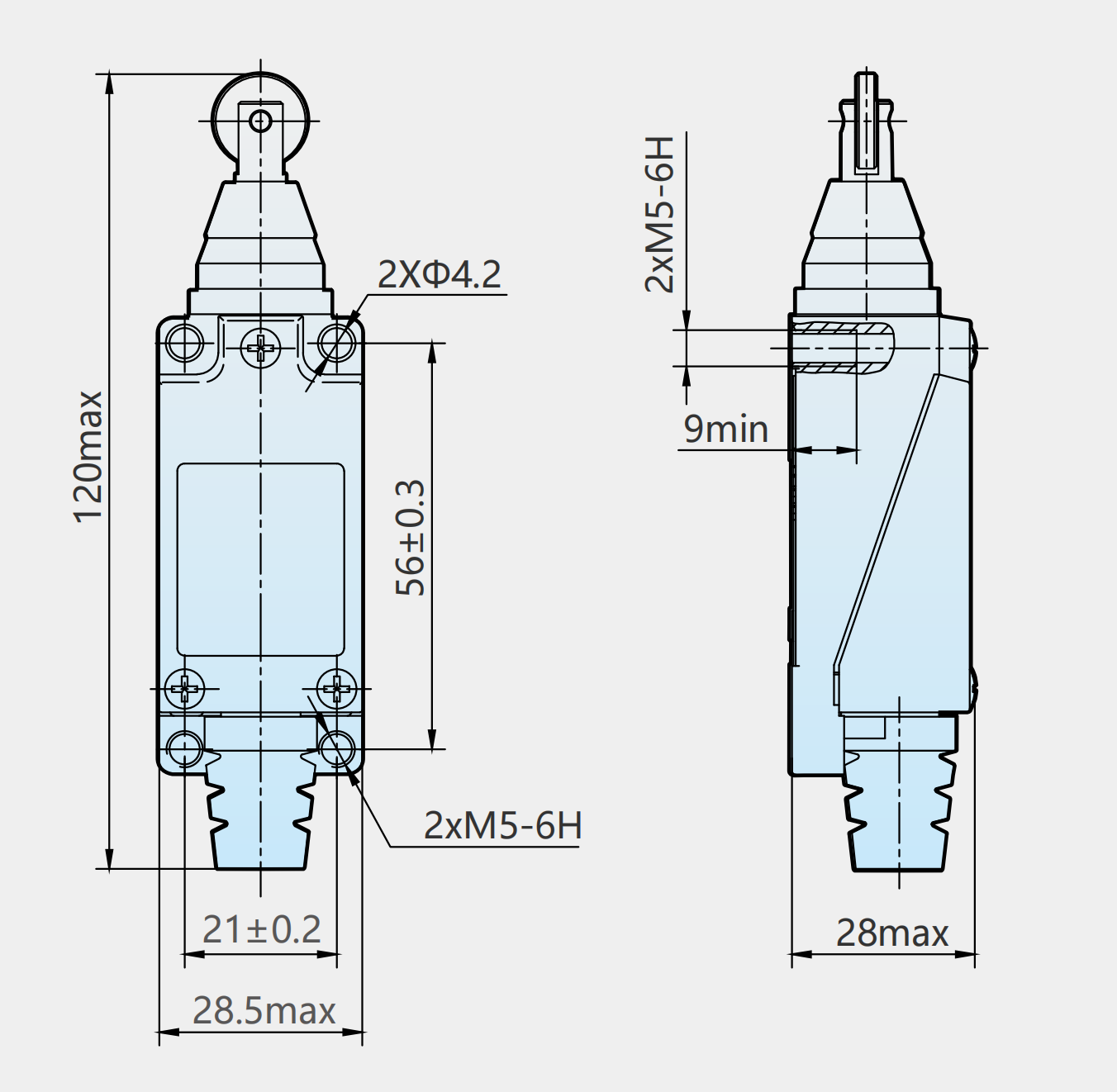
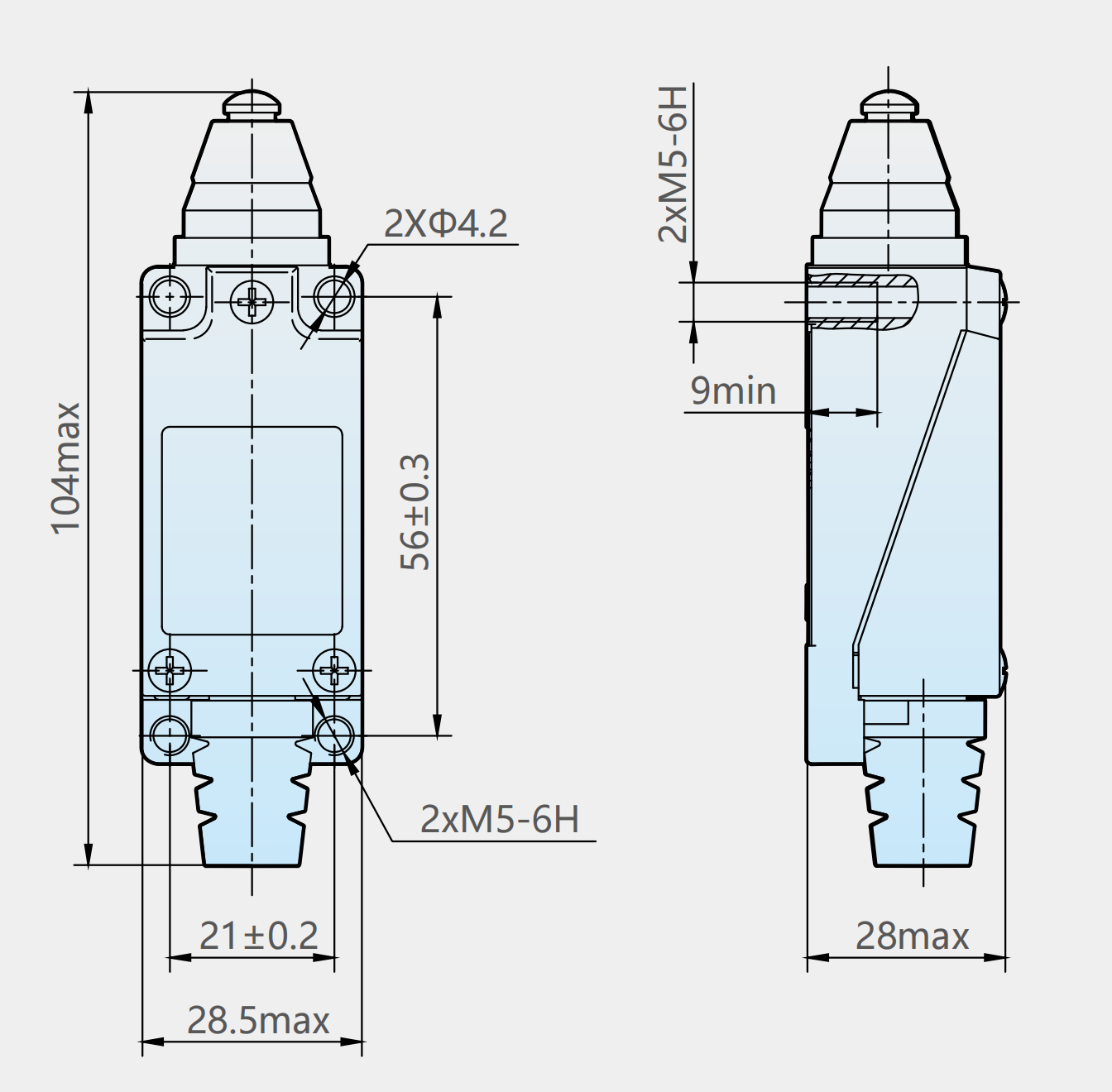
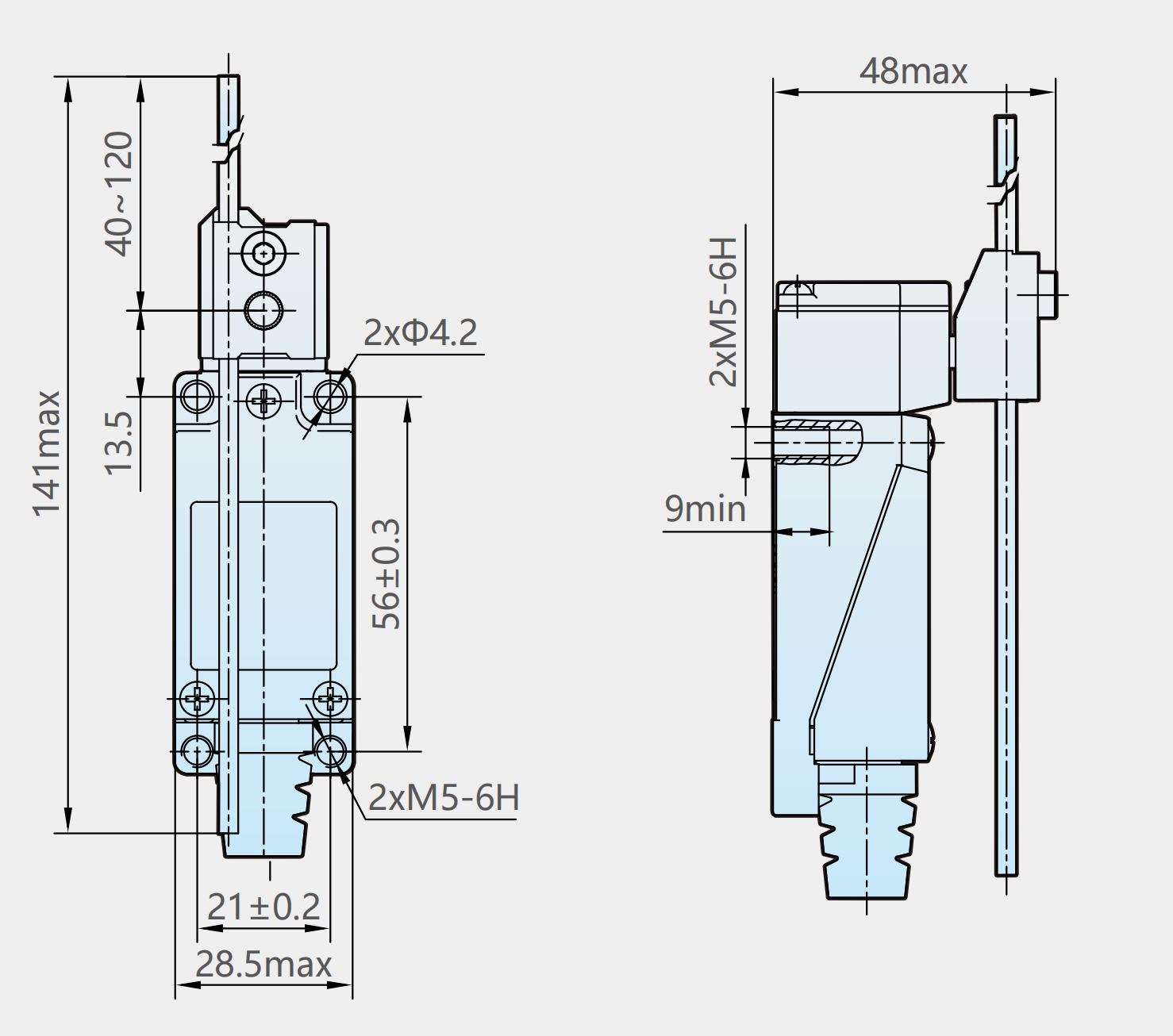
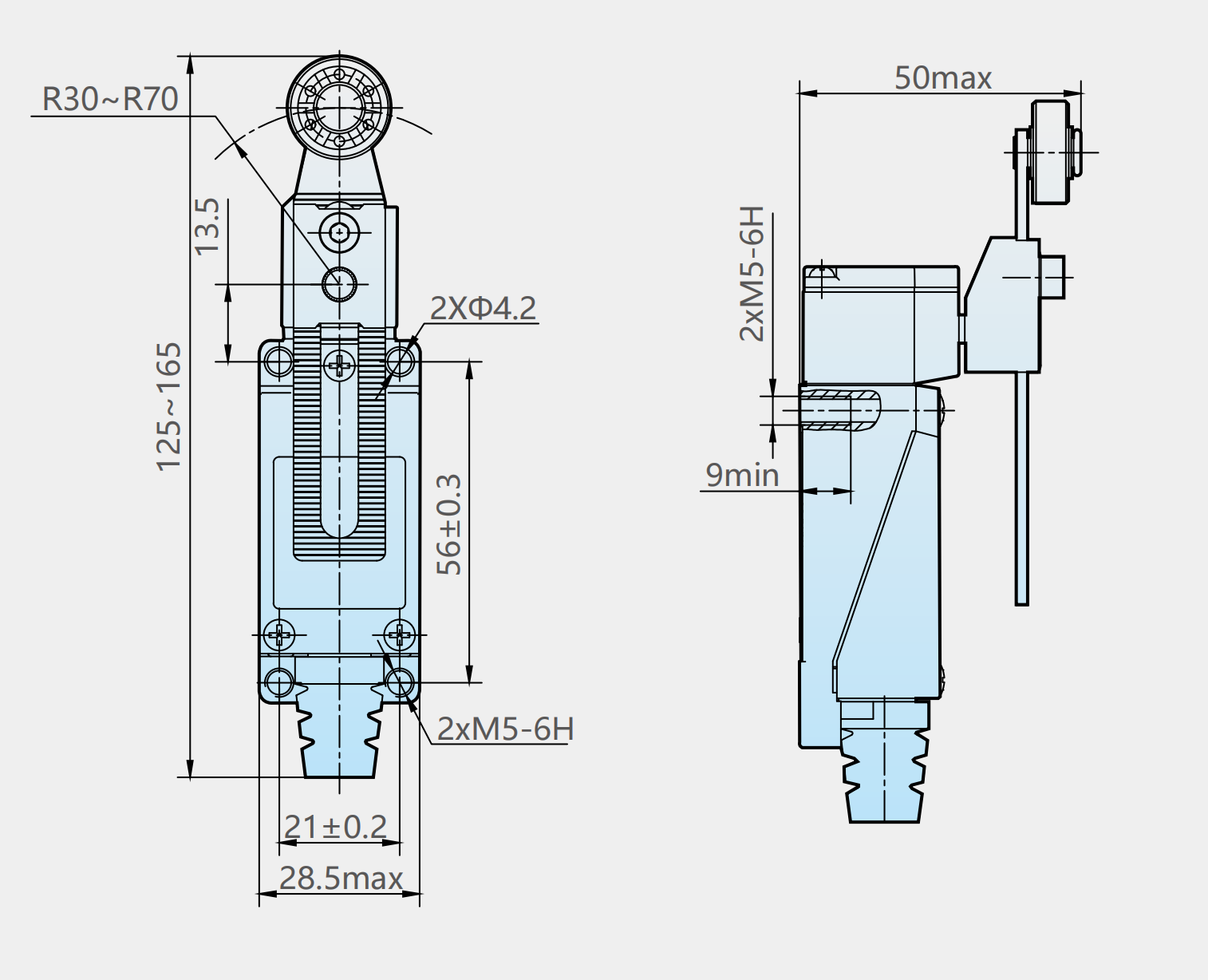
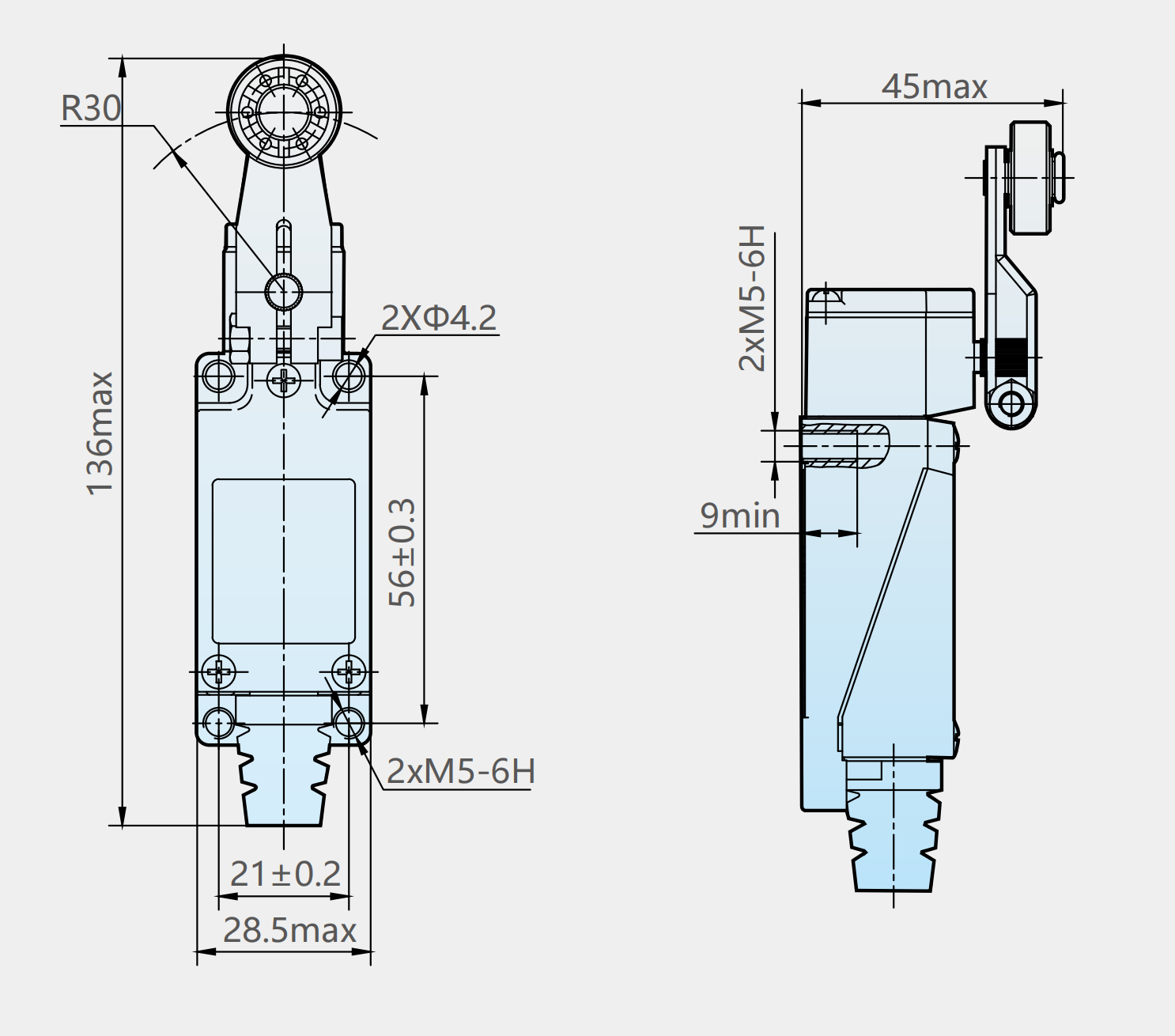
| Parameter | Specification |
|---|---|
| Standard Compliance | IEC 60947-5-1, GB/T 14048.5 |
| Rated Insulation Voltage (Ui) | 415V |
| Rated Impulse Withstand Voltage (Uimp) | 2.5kV |
| Rated Operational Voltage (Ue) | AC-15: 380V / DC-13: 220V |
| Rated Operational Current (Ie) | AC-15: 0.8A / DC-13: 0.16A |
| Protection Degree | IP62 |
| Operating Frequency | 20 operations/minute |
| Ambient Temperature | -5°C to +40°C |
| Pollution Degree | 3 |
| Altitude | ≤ 2000m |
FAQ
Q:Can this limit switch be used for micro-load applications (low voltage/current)?
A:We generally advise against using this standard series for micro-load conditions, as it may reduce contact reliability. If your application involves working voltages below 100V (AC or DC), please contact us for specific advice or alternative recommendations.
Q:Is it safe to keep the switch in the "pressed" or active state for long periods?
A:No, it is not recommended to keep the product in a pressed state for an extended time. Doing so may cause early failure or poor resetting capabilities. We recommend regular maintenance and replacement if the switch is subject to such conditions.
Q:What happens if the machine pushes the switch beyond its travel limit?
A:You must avoid over-travel usage. Pushing the actuator beyond its design limit can cause immediate damage to the internal core (especially in plunger and universal types) or break the lever arm (in rotary types), significantly reducing the product's lifespan.
Q:Are there specific requirements for the operating speed of the limit switch
A:Yes. The operating speed should not be extremely fast or extremely slow. If too slow, contact switching may become unstable. If too fast, the impact force may damage the switch mechanism, or the contacts may fail to switch in time due to high frequency.
Related Recommendations
